| The Public Paperfolding History Project
Last updated 15/2/2026 x |
|||||||
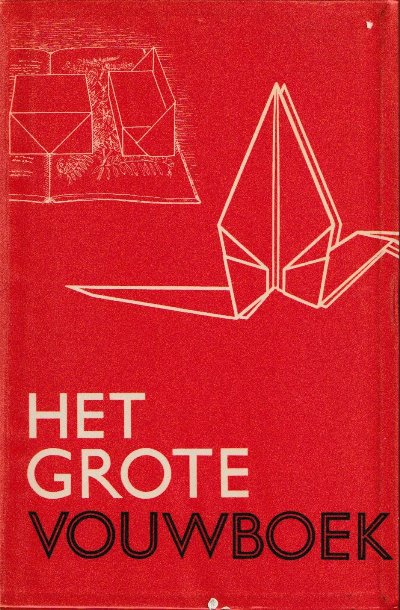
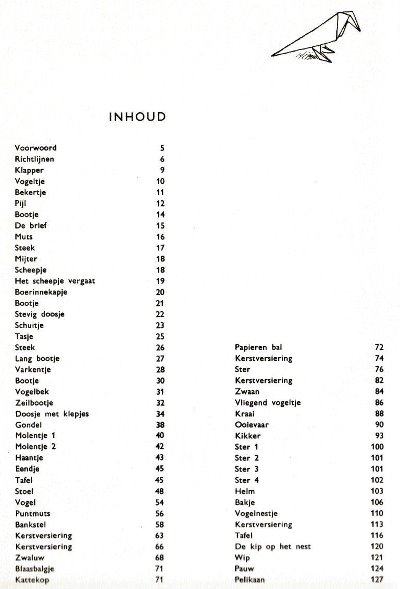
| Het Grote Vouwboek (Second Edition) by Aart van Breda, 1963 | |||||||
| This
much revised and enlarged second edition of 'Het Grote
Vouwboek' by Aart van Breda was published by Uitgeverij
van Breda in 1963.
According to Joan Sallas only 23 of the designs from the
first edition survive in the second, which is thus
effectively a different work. In his Foreword the author says: 'About half of the book contains very old models, and the other half, as far as I know, are my own discoveries. These include tables, chairs, animals, boats, stars, and some decorations.' The author does not specifically label those designs which are his own invention, but since many of the designs are not previously known it seems logical to infer that these are the designs he is referring to. An English translation titled 'Paper Folding and Modelling' was published in 1965. A German translation titled 'Kempers Grosses Papierfaltbuch: Falten und gestalten' was published in 1965. A Spanish translation 'Origami: el arte del papel plegado' was published in 1972. **********
**********
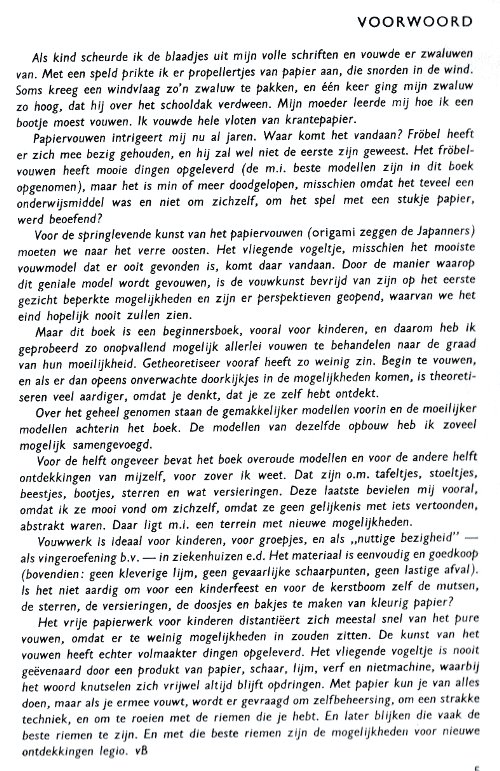
********** Roughly translated this Foreword reads: 'As a child I tore the pages from notebooks and folded them into swallows (ie the swallow paper plane). I'd pin little paper propellors to them, which would whistle in the wind. Sometimes a gust would catch one of them, and once my swallow flew so high it disappeared over the school roof. My mother taught me how to fold a boat. I'd fold whole rafts out of newspaper. Paperfolding has intrigued me for years. Where does it come from? Froebel explored it, and he probably wasn't the first. Froebel folding has produced some beautiful things (the best models, in my opinion, are included in this book) but it more or less fizzled out, perhaps because it was too much of a teaching tool and wasn't practised fopr its own sake, for the fun of playing with a piece of paper? For the vibrant art of paperfolding (origami as the Japanese call it) we must travel to the Far East. The flying bird, perhaps the most beautiful folding pattern ever discovered, originated there. The way this ingenious pattern is folded has liberated the art of paperfolding from its seemingly limited possibilities and opened up new horizons, the end of which we will hopefully never see. (I have omitted two paragraphs here.) About half of the book contains very old models, and the other half, as far as I know, are my own discoveries. These include tables, chairs, animals, boats , stars, and some decorations. I particularly liked the latter because I found them beautiful in their own right, lacking any resemblance to anything. Their abstract nature, in my opinion, opens up a new field of possibilities. (The last two paragraphs are not translated here.)
**********
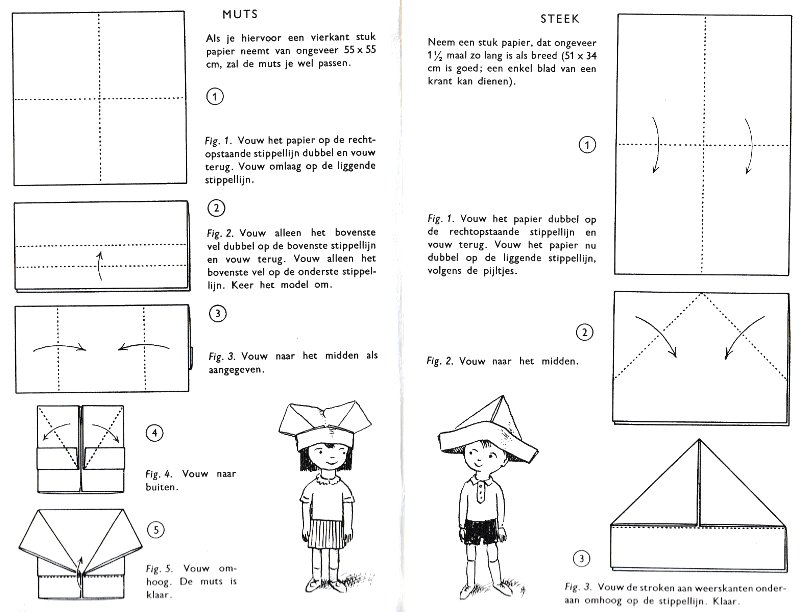
********** Analysis The designs are not presented in this Analysis in the order in which they appear in the work. Hats (7) Muts
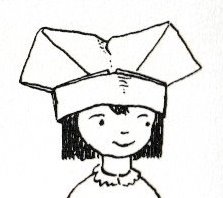
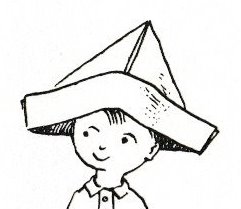
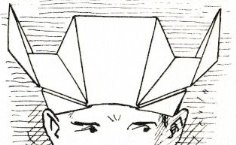
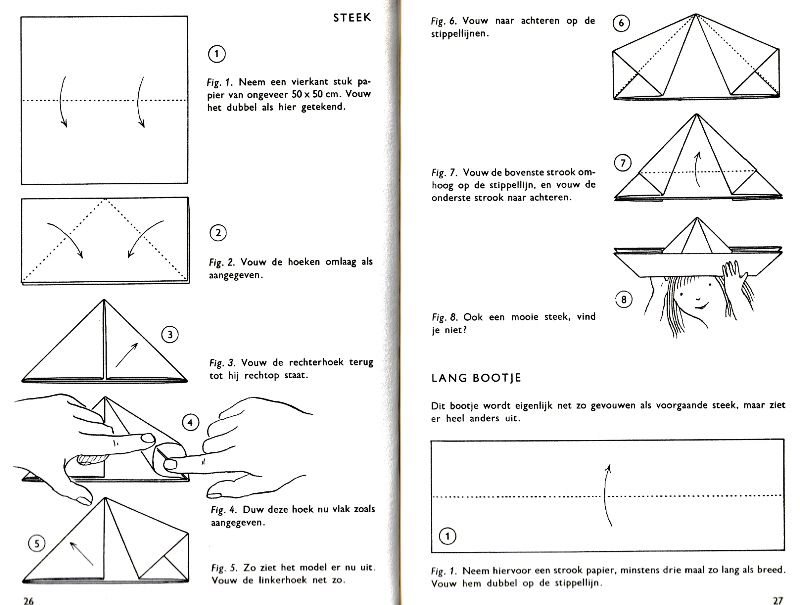
********** Steek - The Newspaper Hat
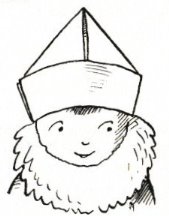
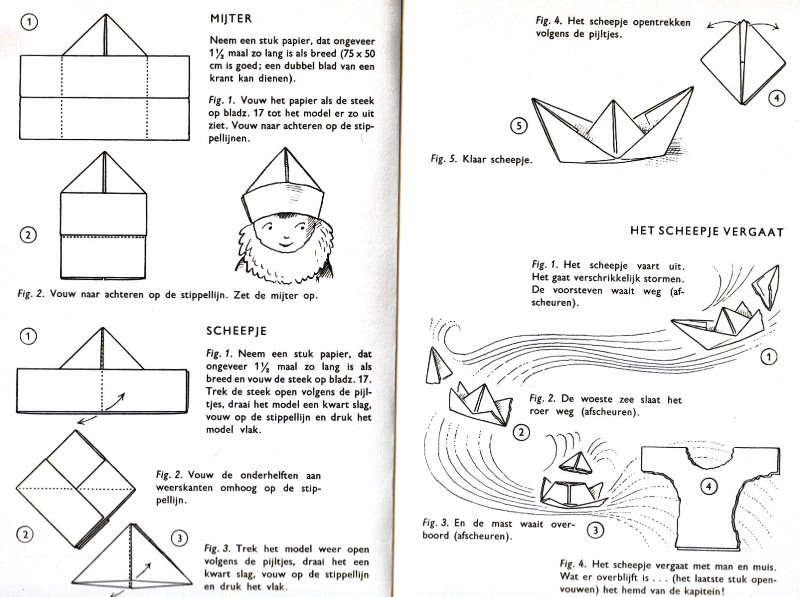
********** Mijter
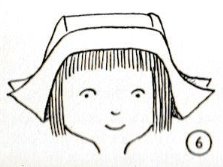
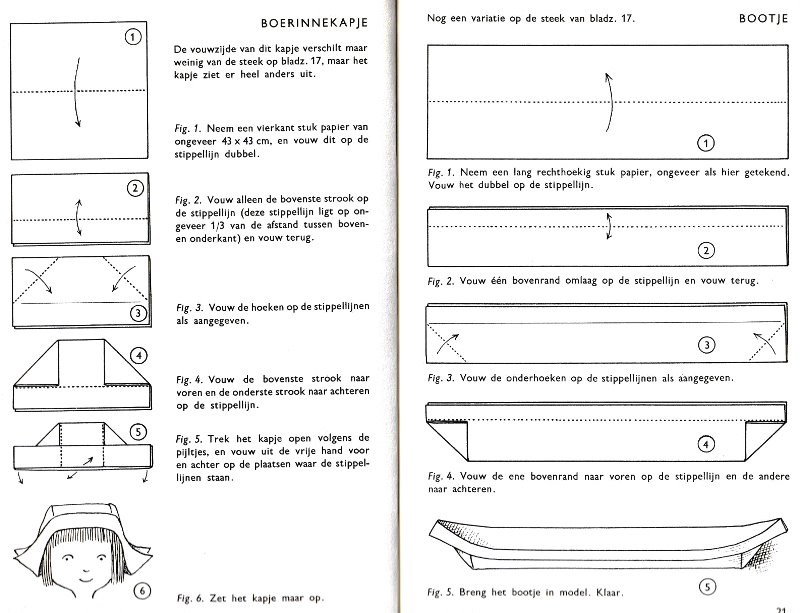
********** Boerinnekapje
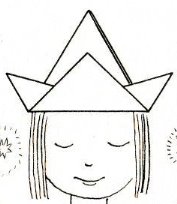
********** Steek
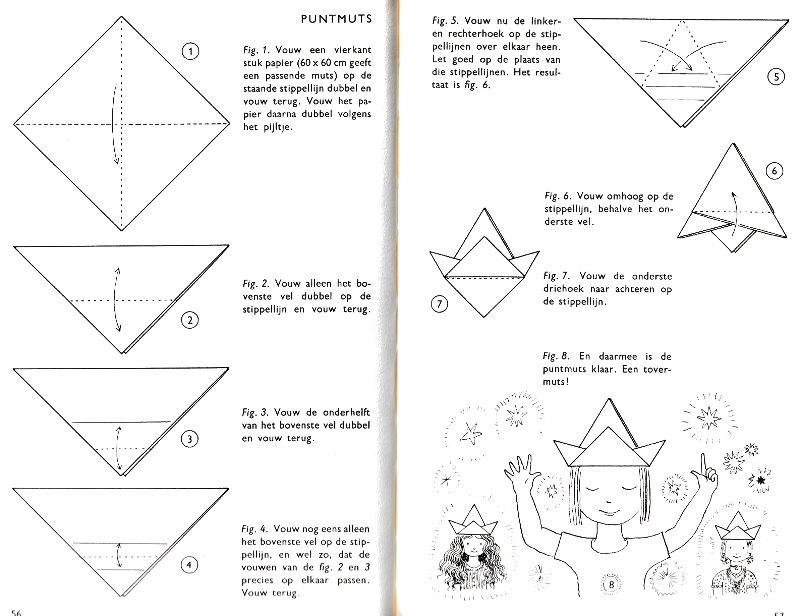
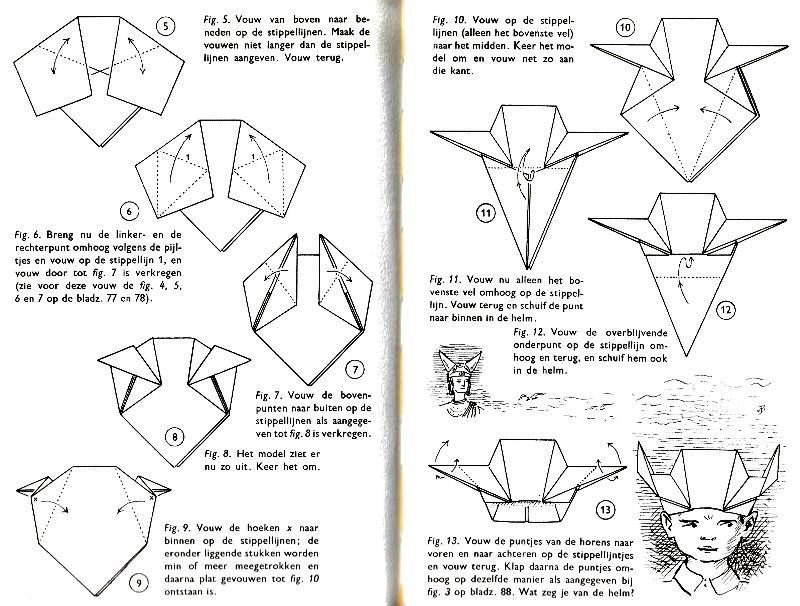
********** Puntmuts
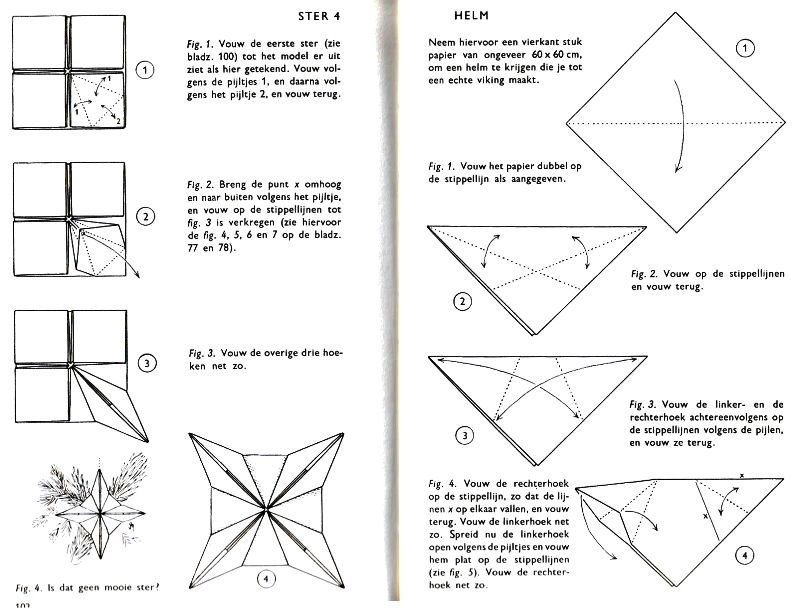
********** Helm
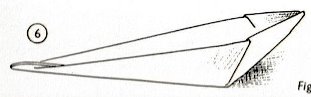
********** Boats (8) Bootje - The Paper Dart Boat
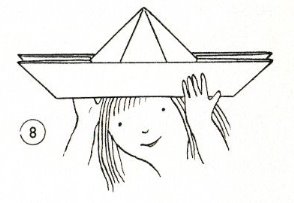
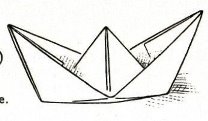
********** Scheepje - The Paper Boat
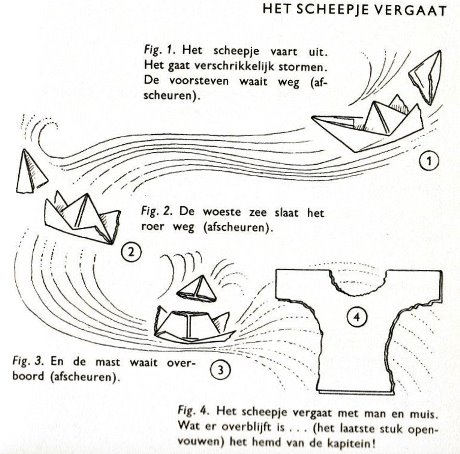
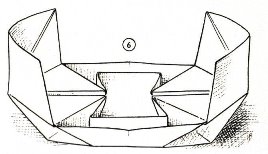
********** Het Scheepje Vergaat - The Captain's Shirt
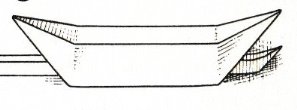
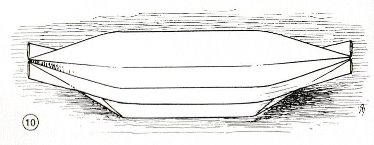
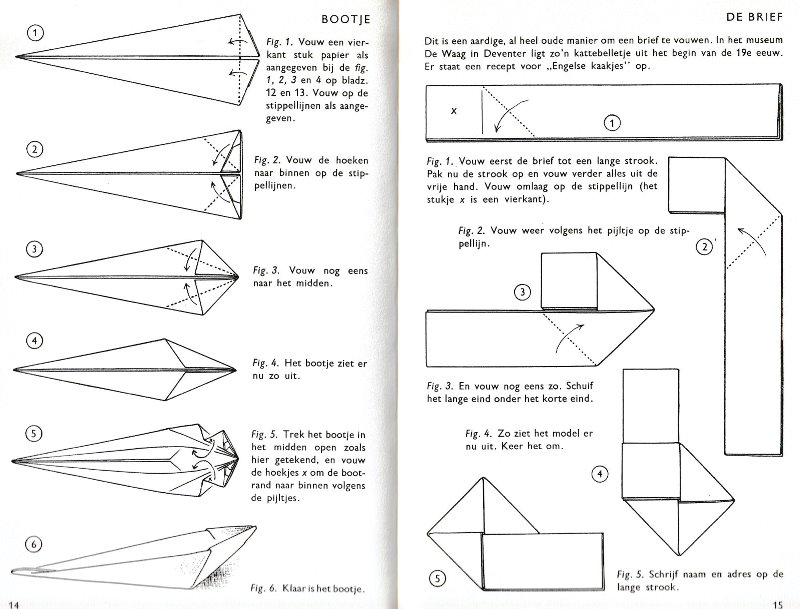
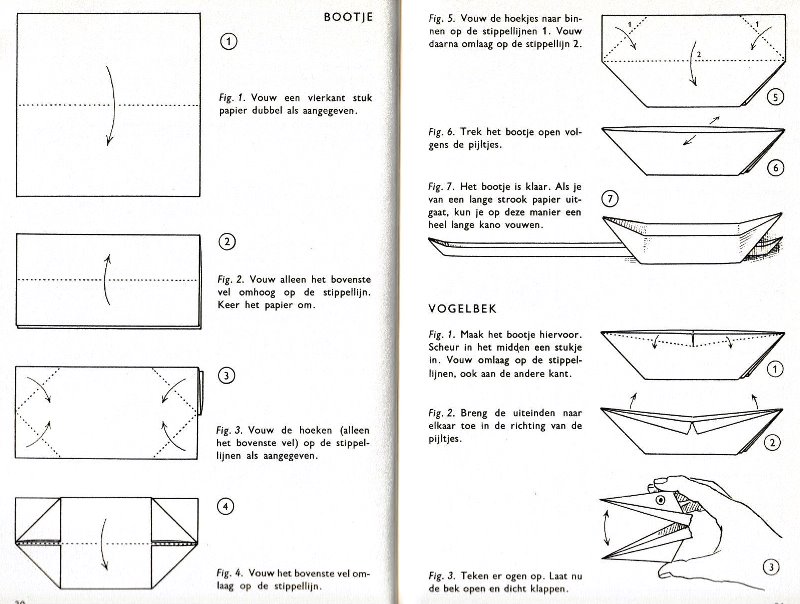
********** Bootje - The Keel Boat
********** Bootje - a version of The Keel Boat
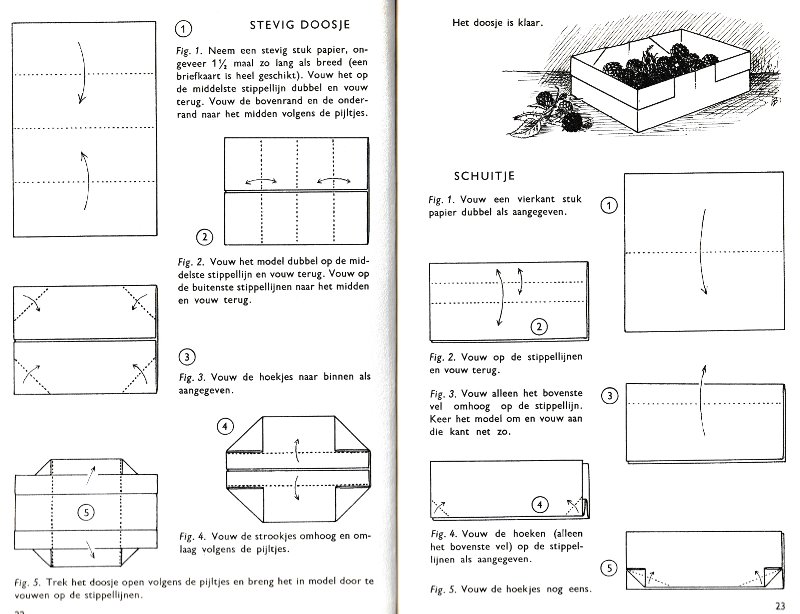
********** Schuitje - a version of The Keel Boat
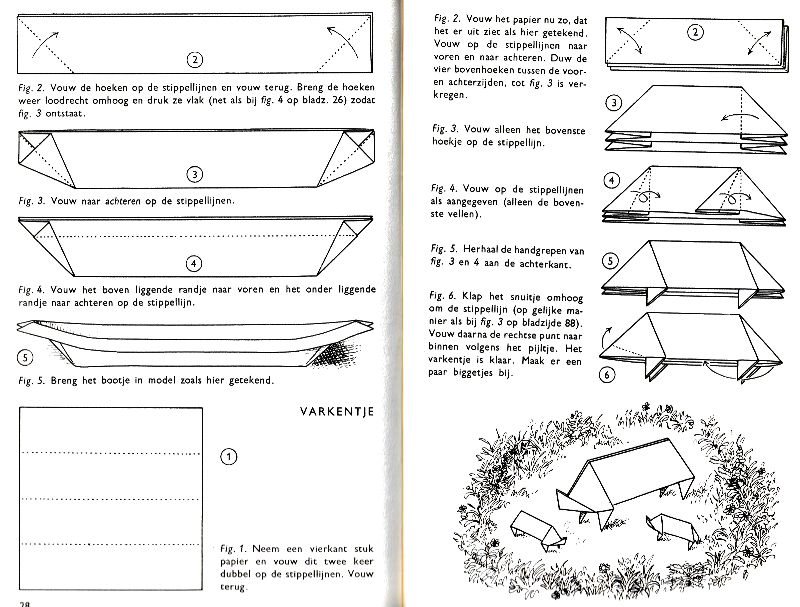
********** Lang Bootje - a version of The Keel Boat
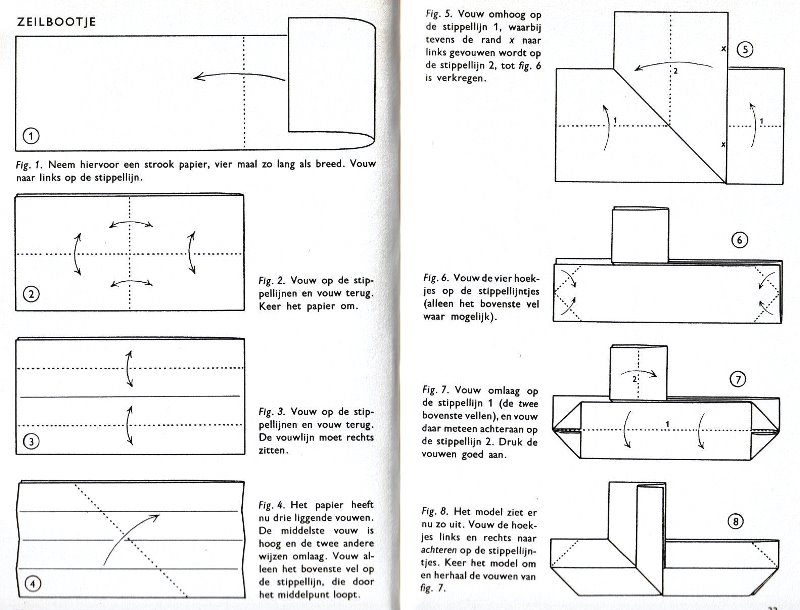
********** Zeilbootje From a 4x1 strip
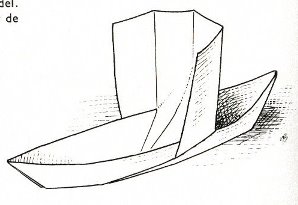
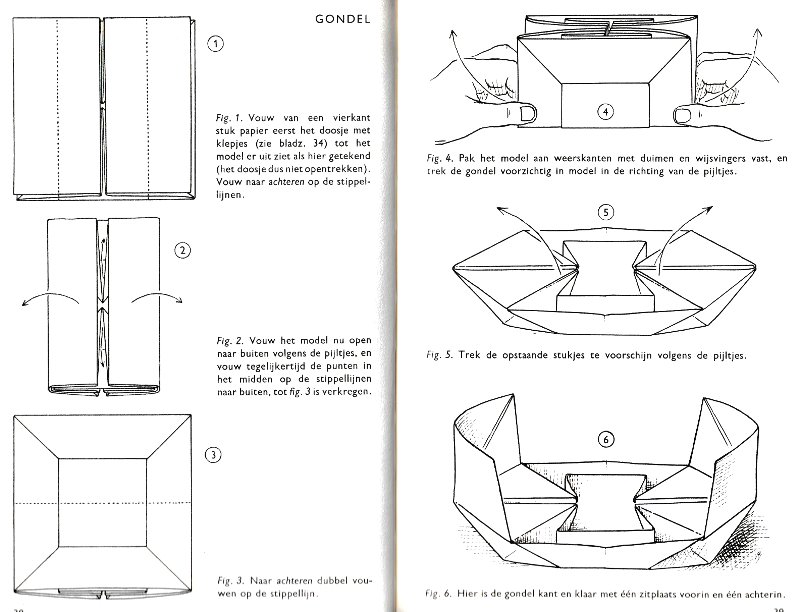
********** Gondel - The Chinese Junk
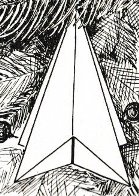
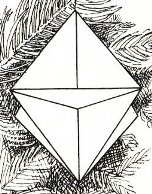
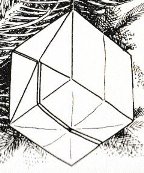
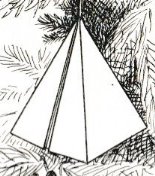
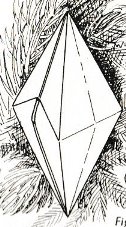
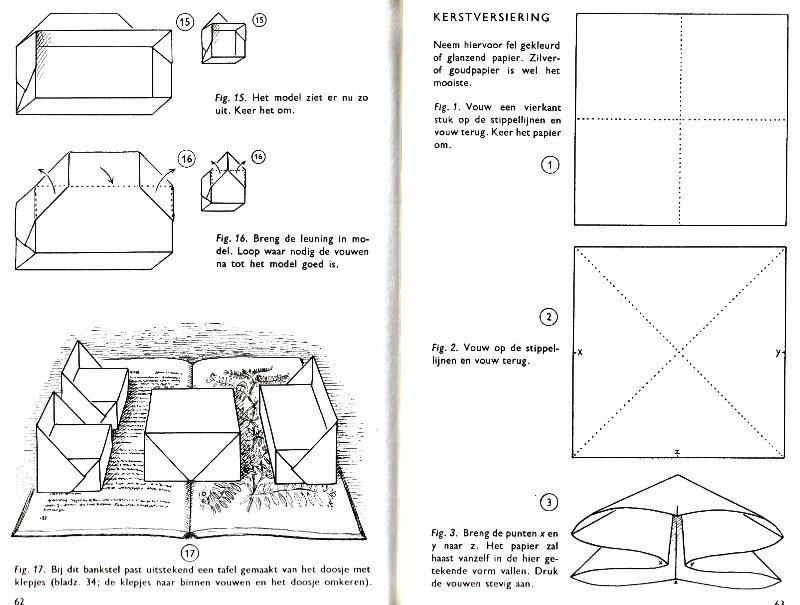
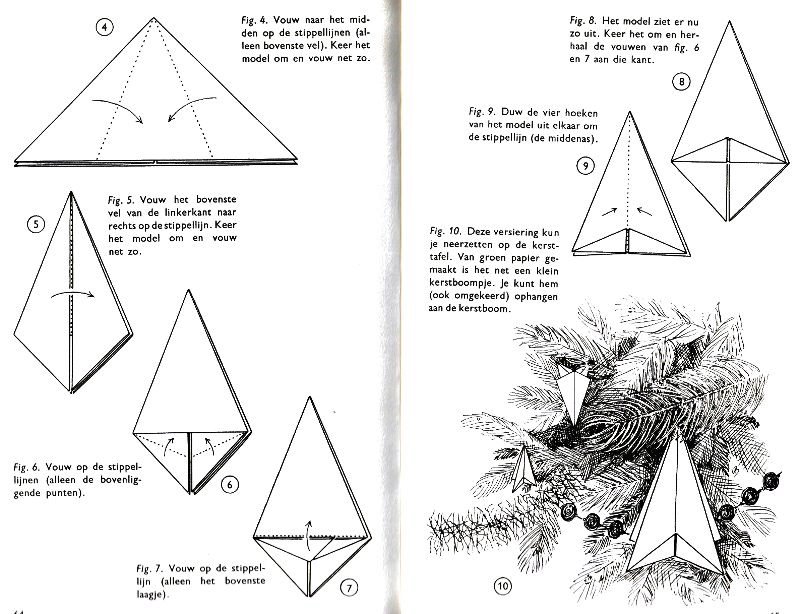
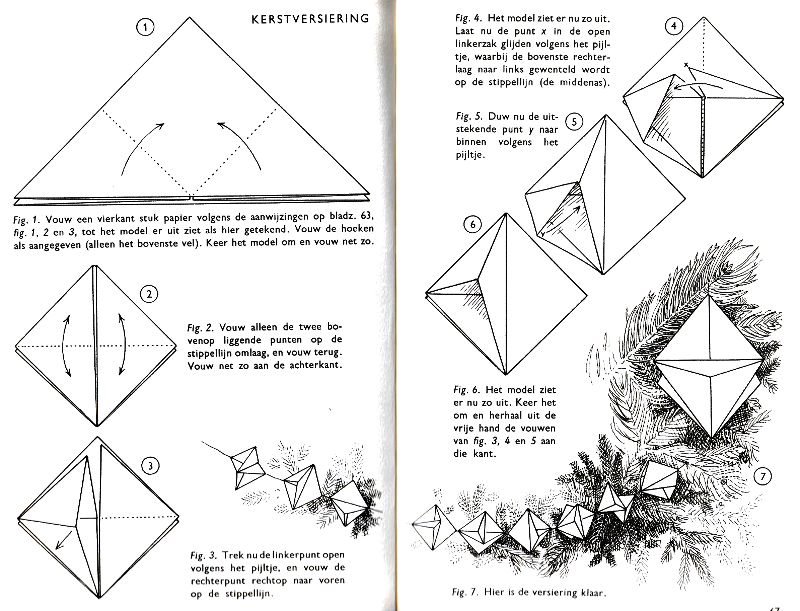
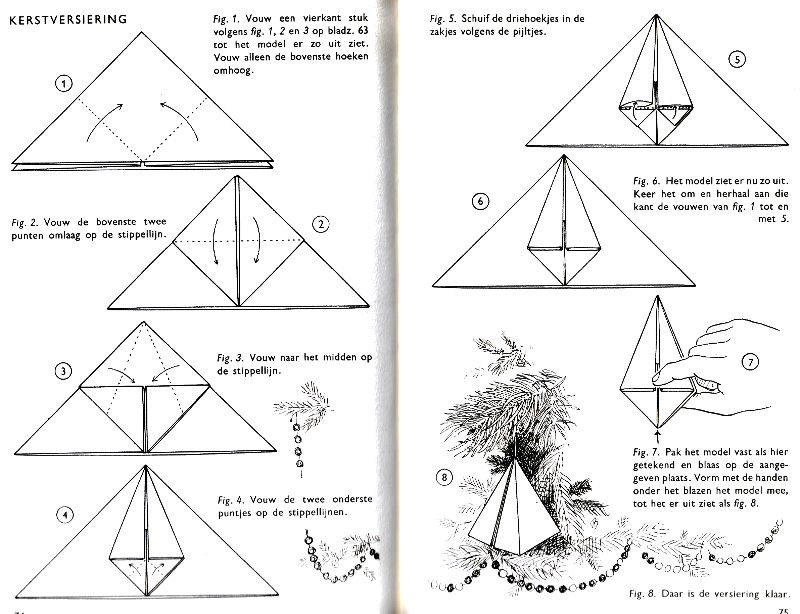
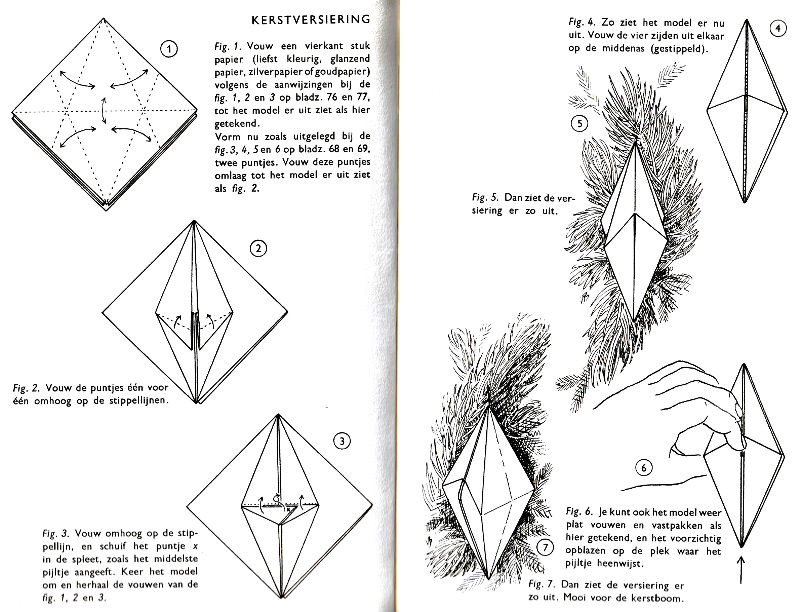
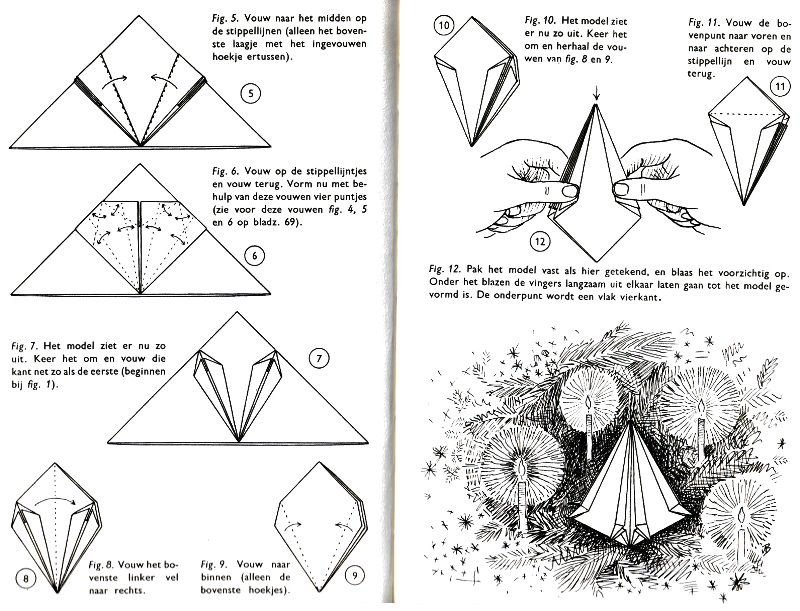
********** Hanging Decorations (7) Kerstversiering
********** Kerstversiering
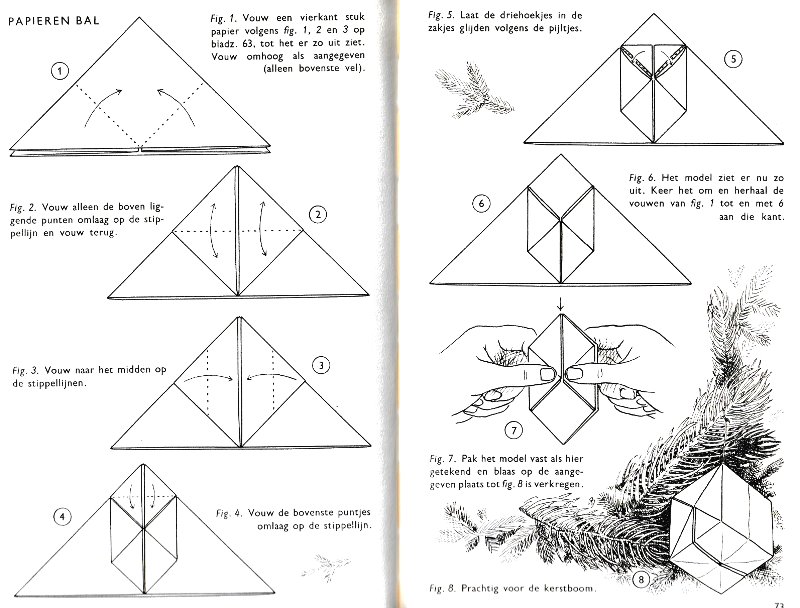
********** Papieren Bal - The Waterbomb
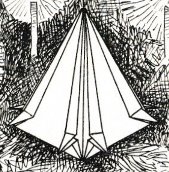
********** Kerstversiering
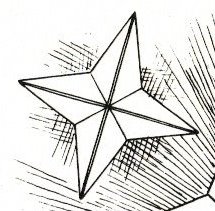
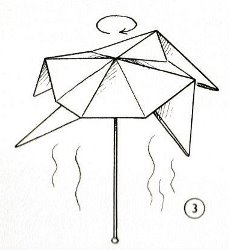
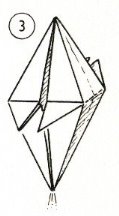
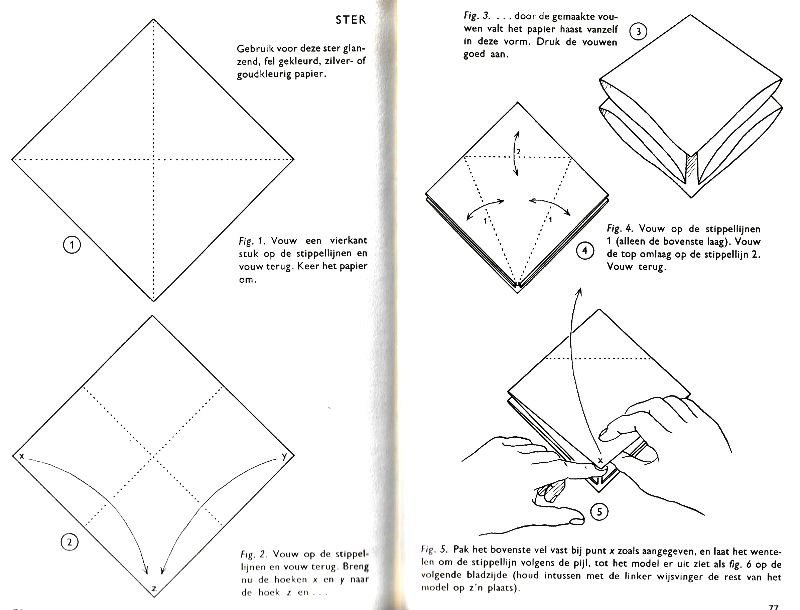
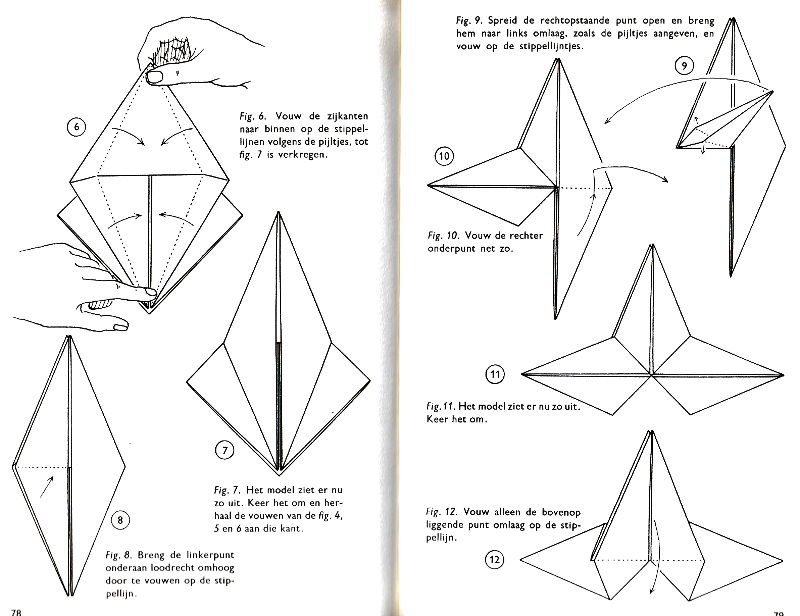
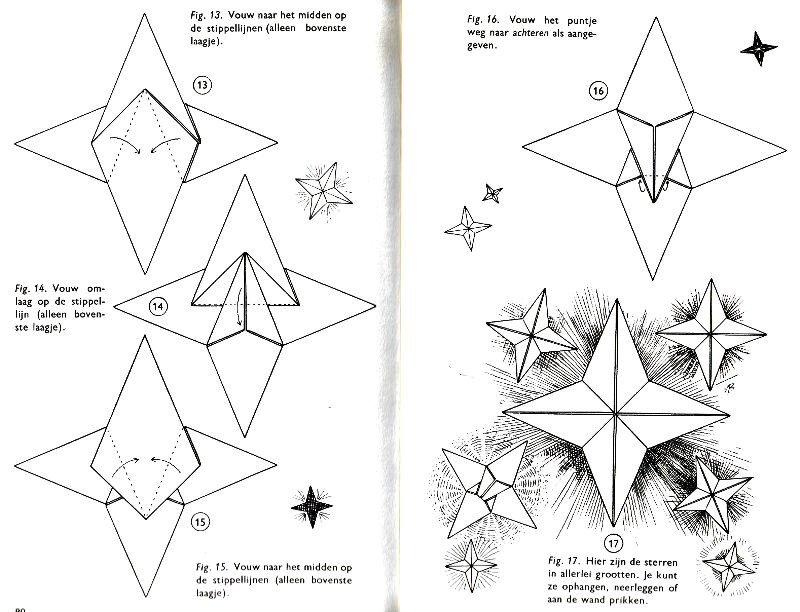
********** Ster
********** Kerstversiering
********** Kerstversiering
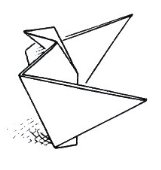
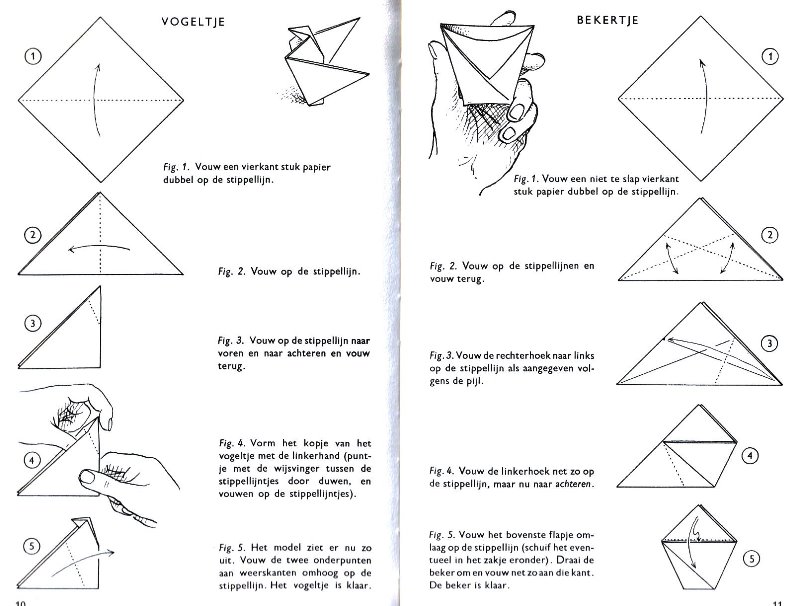
********** Birds (12) Vogeltje
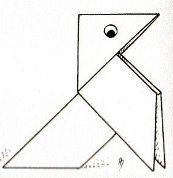
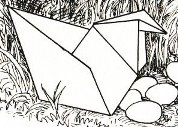
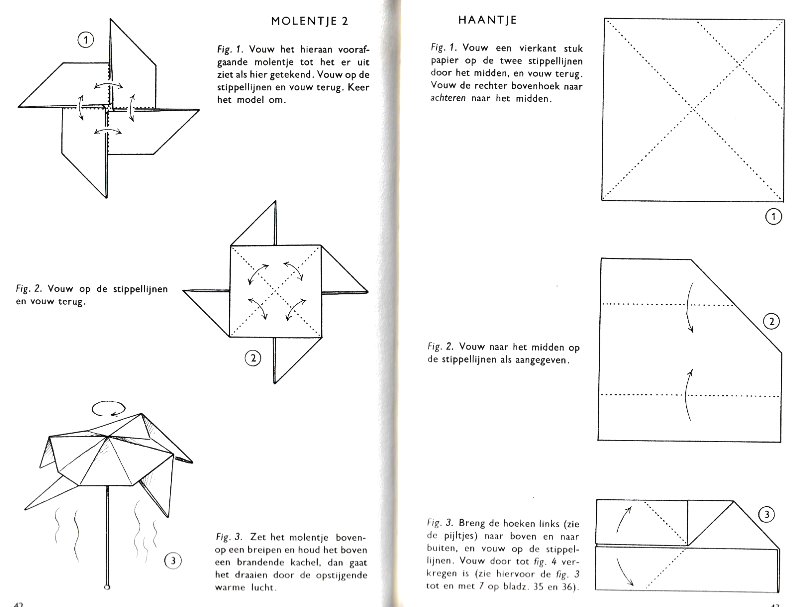
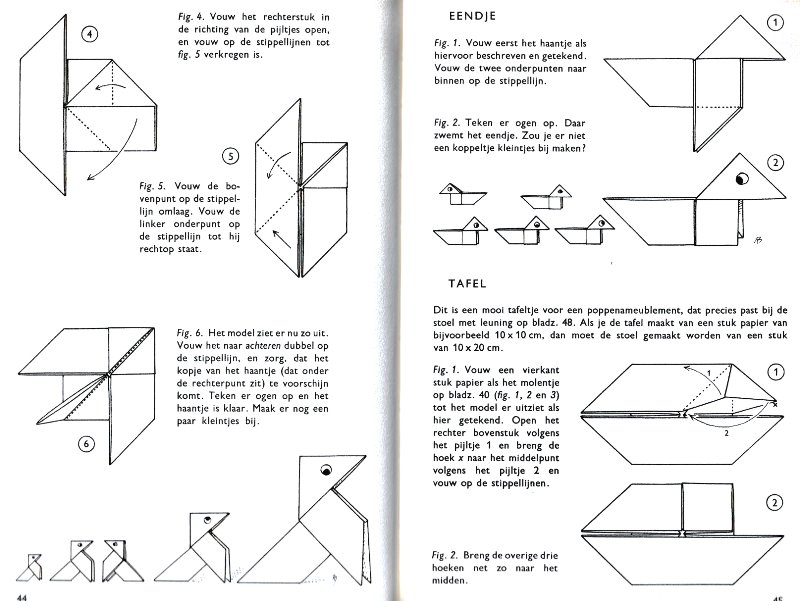
********** Haantje - The Cocotte / Pajarita
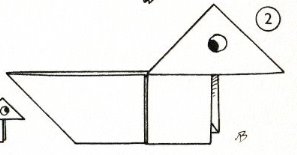
********** Eendje - The Duck
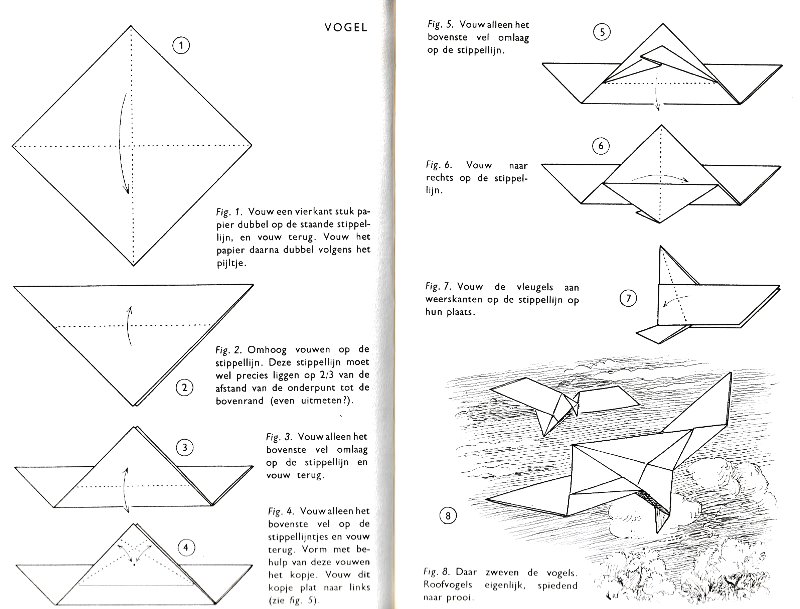
********** Vogel
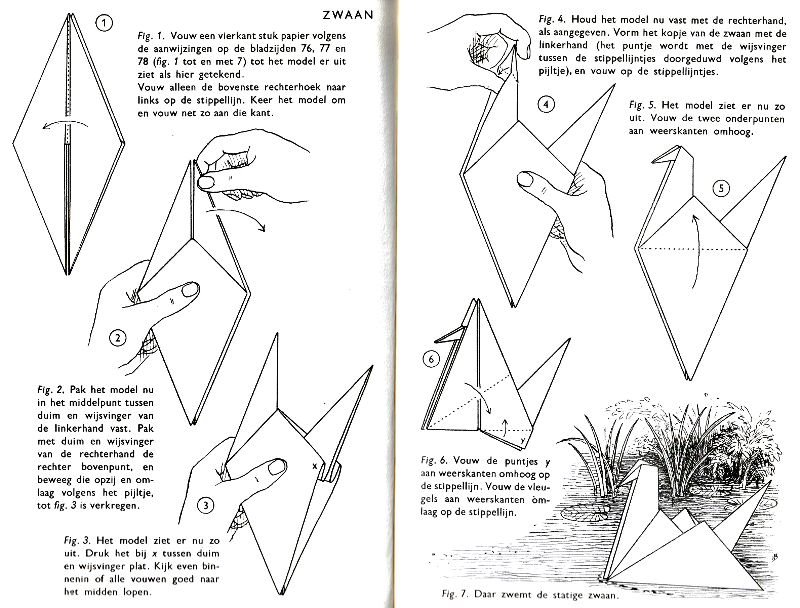
********** Zwaan - a version of The Flapping Bird
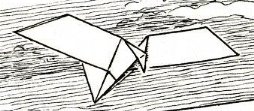
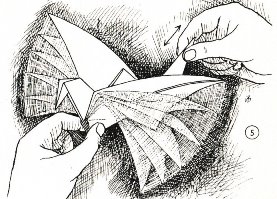
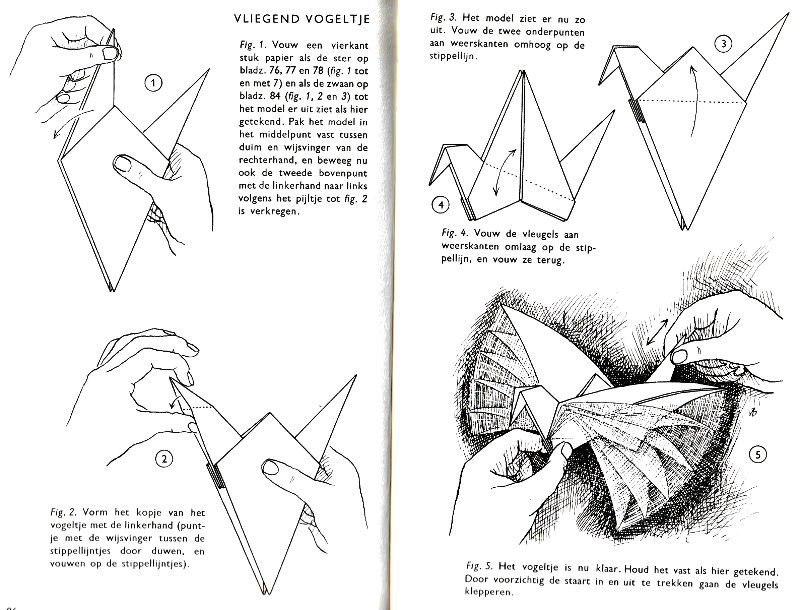
********** Vliegend Volgeltje - The Flapping Bird In his Foreword the author says of this design: 'For the vibrant art of paperfolding (origami as the Japanese call it) we must travel to the Far East. The flying bird, perhaps the most beautiful folding pattern ever discovered, originated there. The way this ingenious pattern is folded has liberated the art of paperfolding from its seemingly limited possibilities and opened up new horizons, the end of which we will hopefully never see.
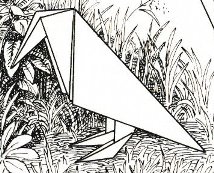
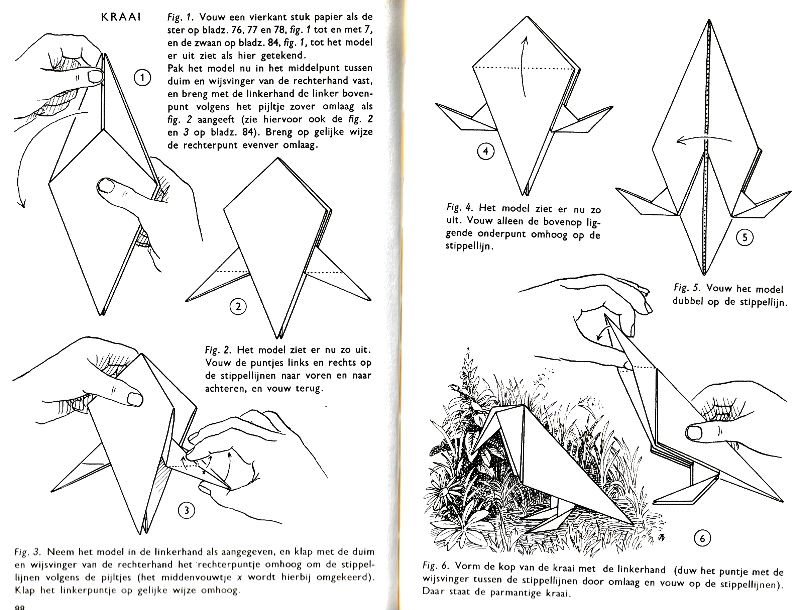
********** Kraai - The Crow with Legs
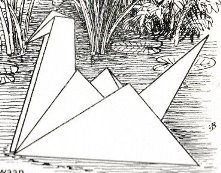
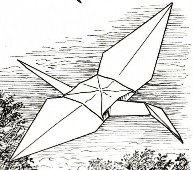
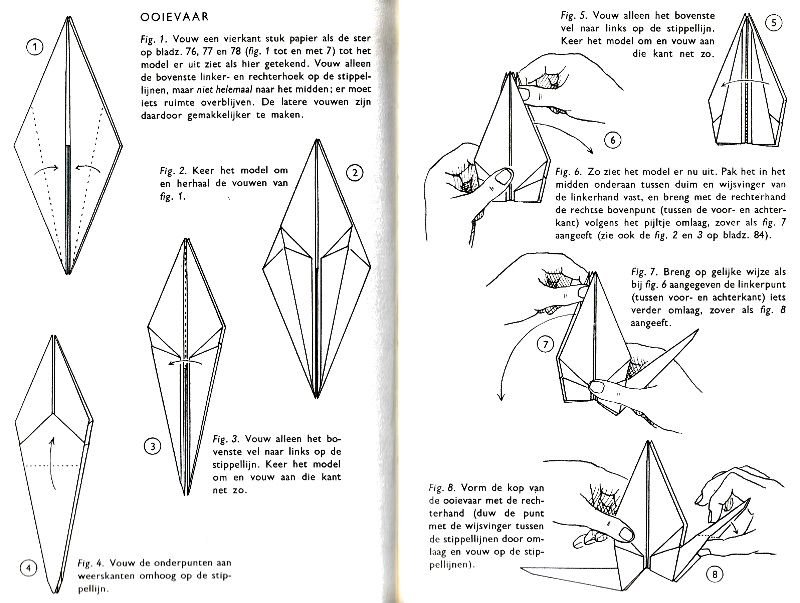
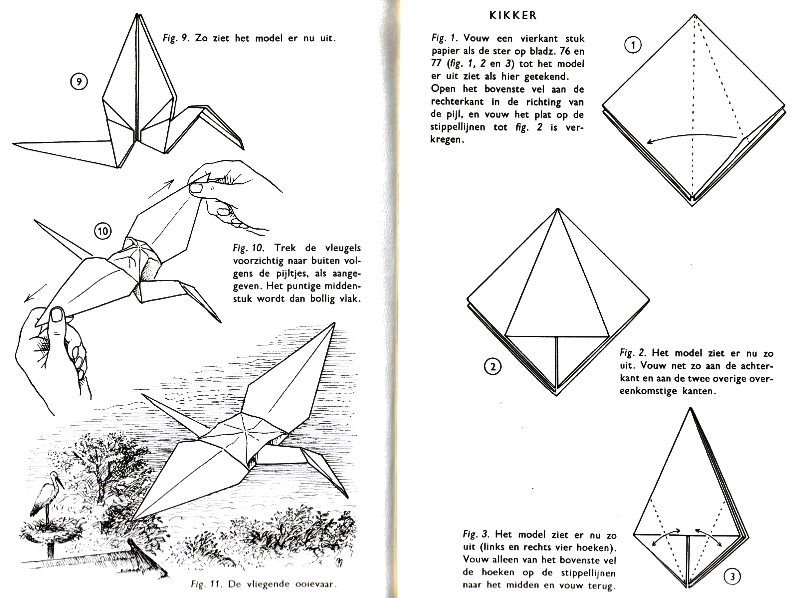
********** Ooievar - The Paper Crane
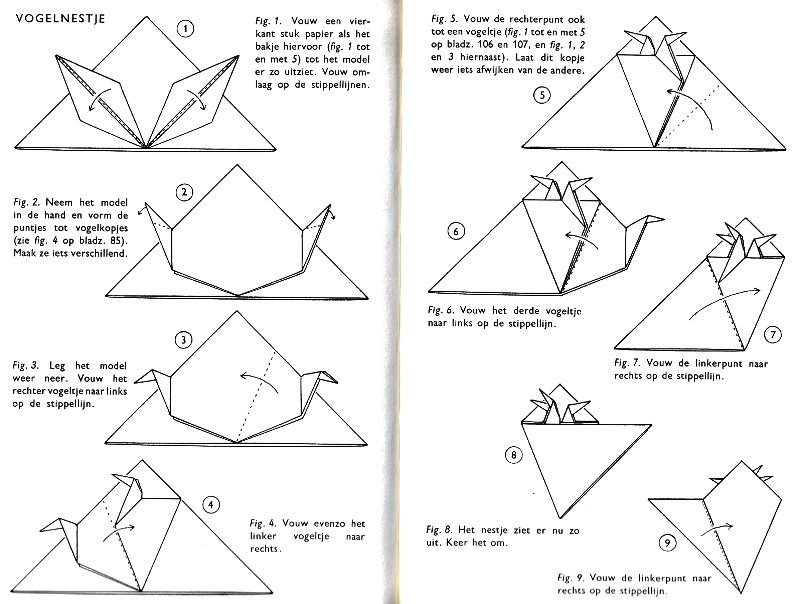
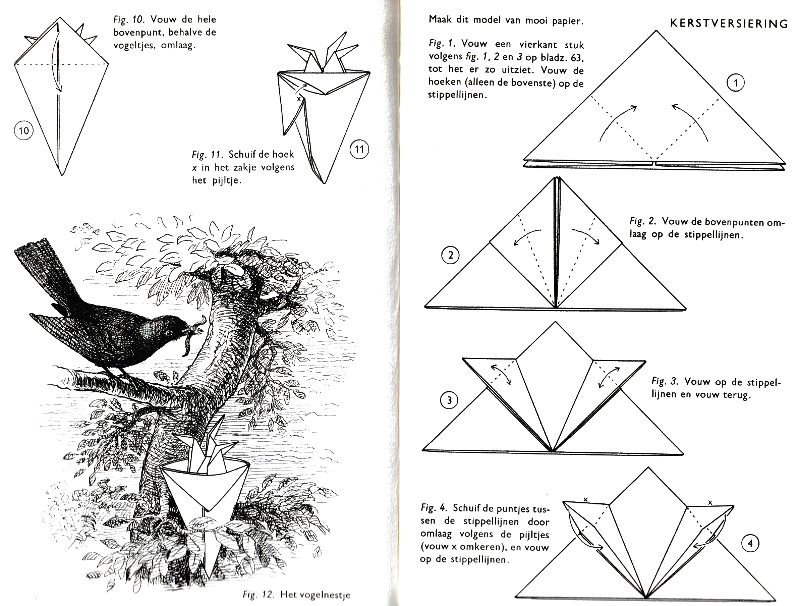
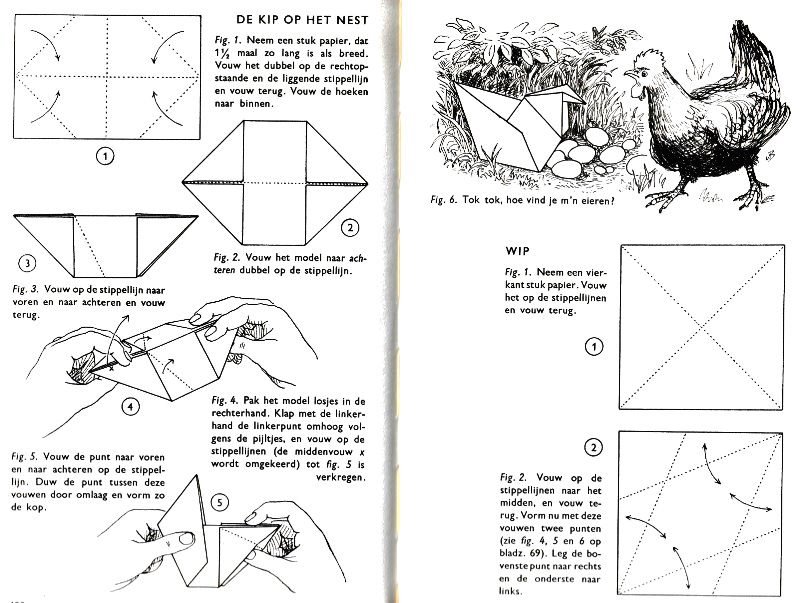
********** Vogelnestje
********** Der Kip op Het Nest
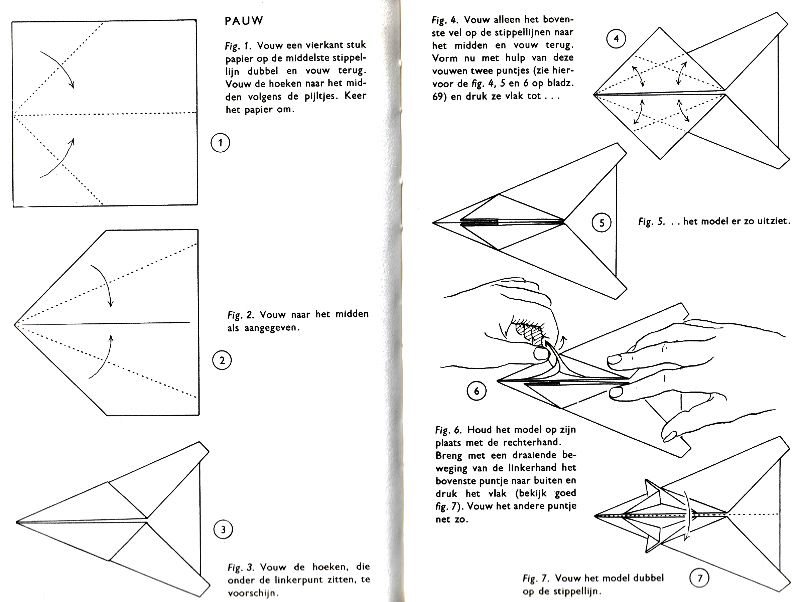
********** Pauw
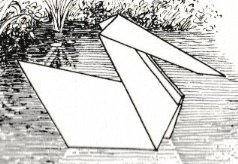
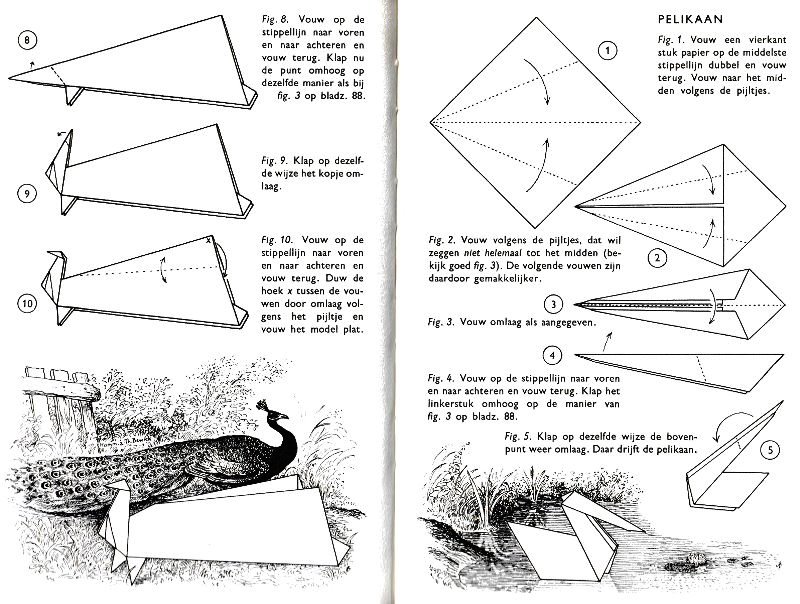
********** Pelikaan
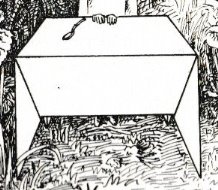
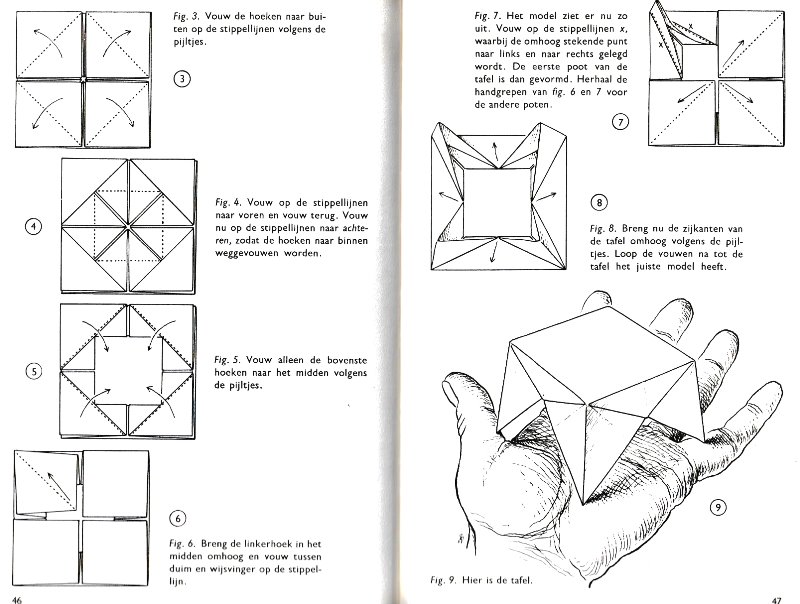
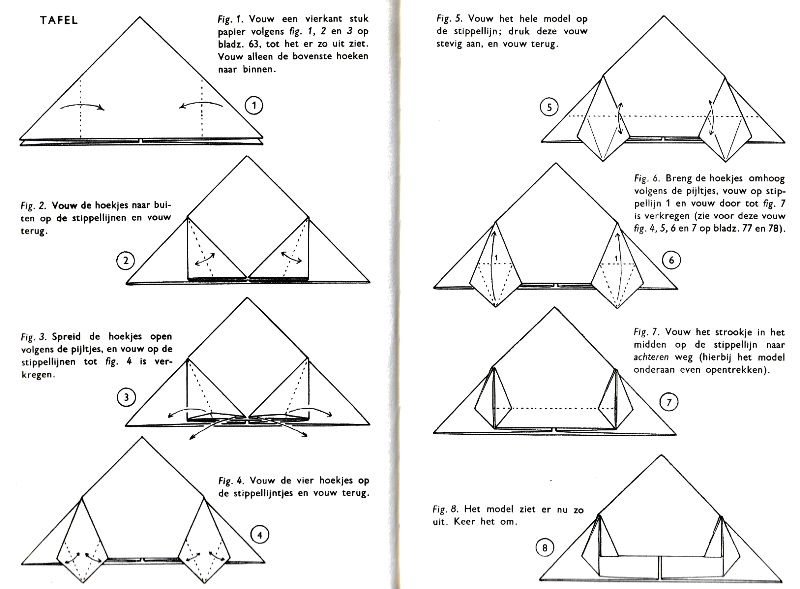
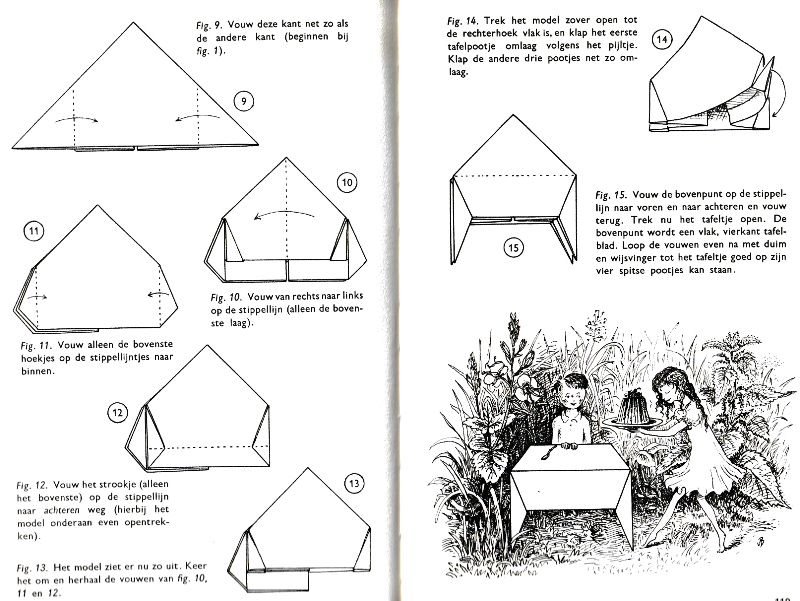
********** Furniture (6) Tafel
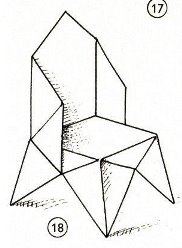
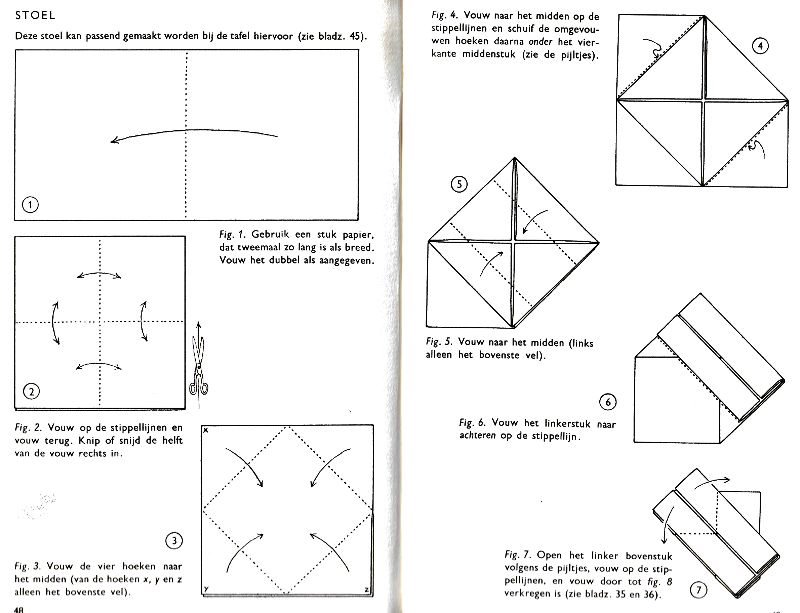
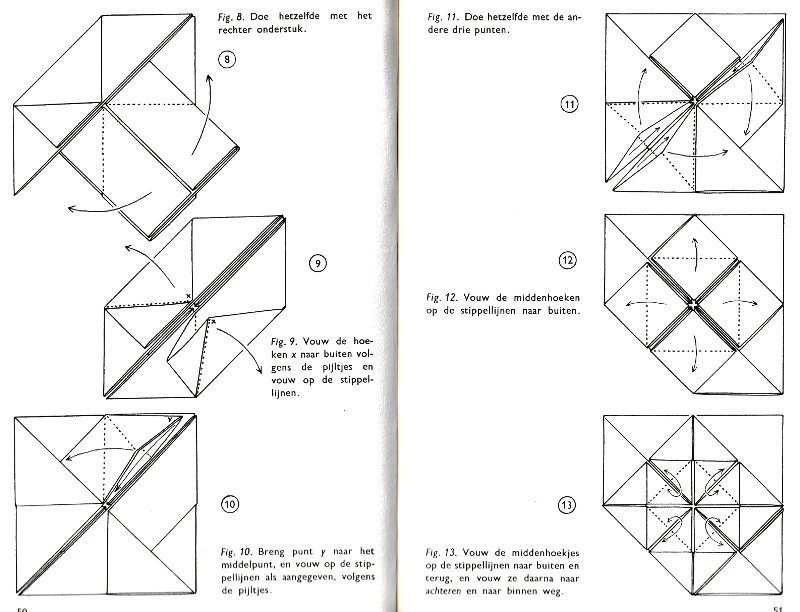
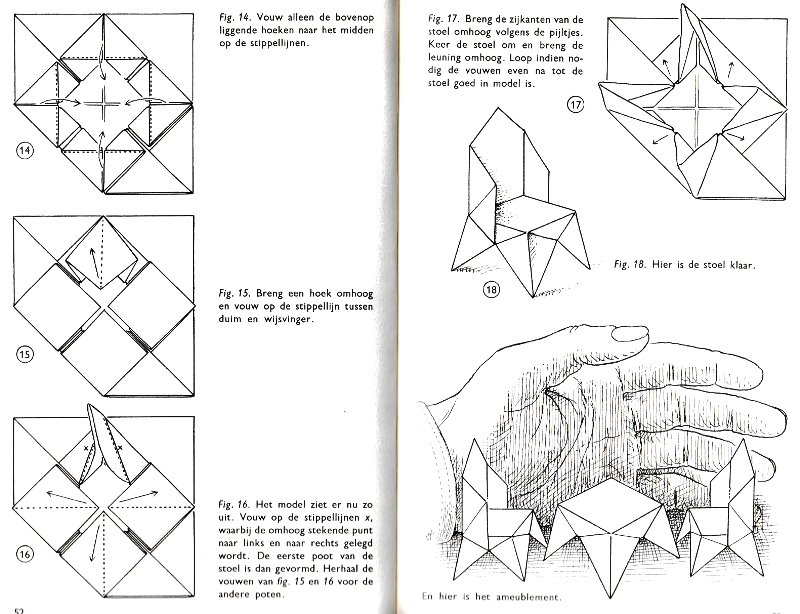
********** Stoel
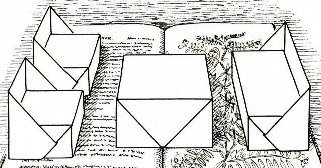
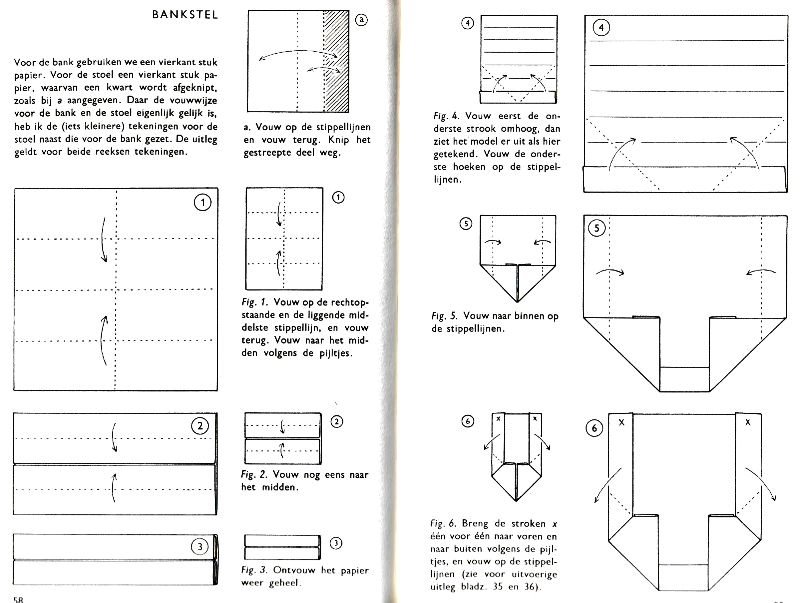
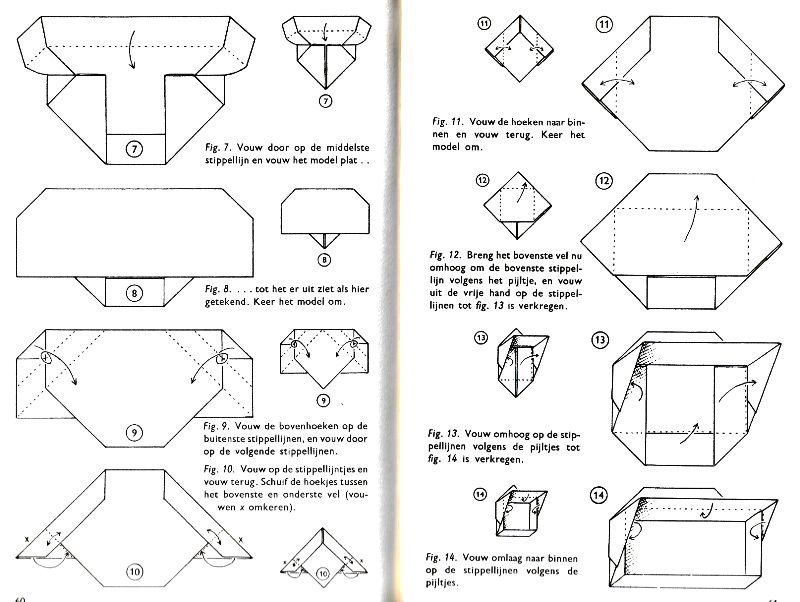
********** Bankstel
********** Tafel
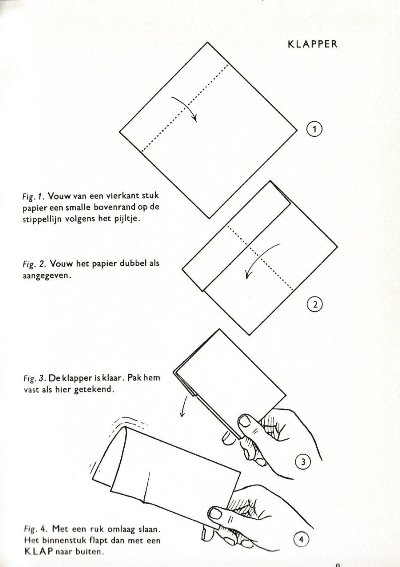
********** Other Designs Klapper - The Simple Banger
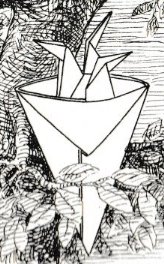
********** Bekertje - The Paper Cup
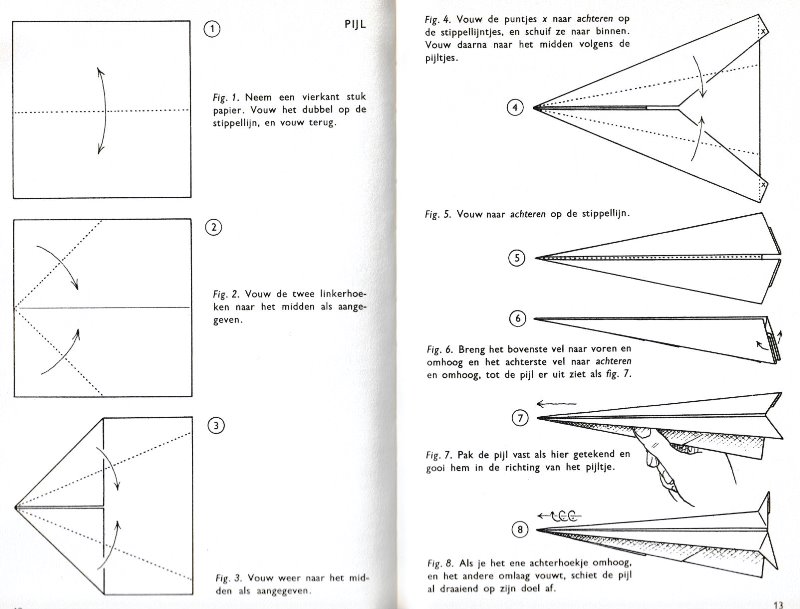
********** Pijl - The Paper Dart (But folded from a square)
********** De Brief - The Love Knot Letterfold
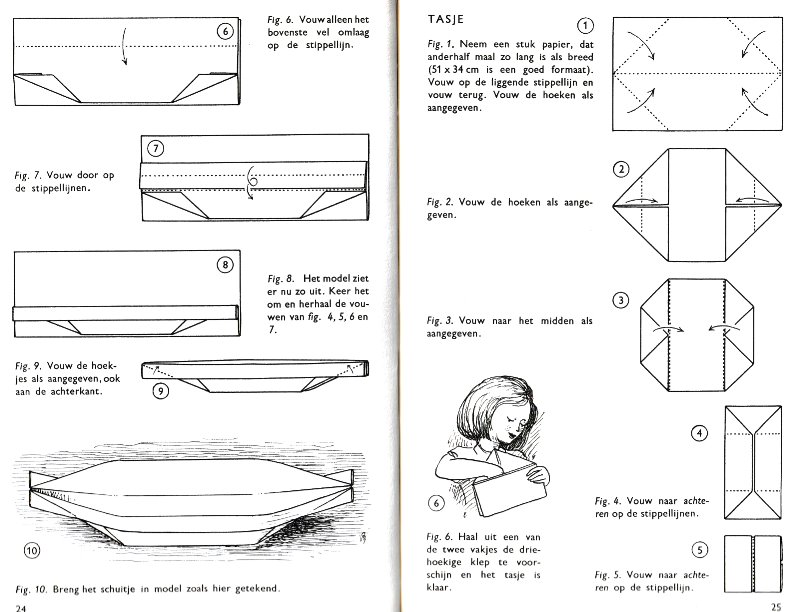
********** Tasje - The Wallet
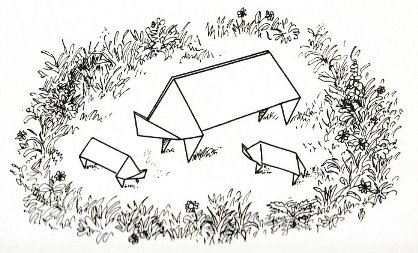
********** Vaarkentje - The Pig (An unusual version ...)
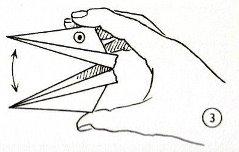
********** Vogelbek (Cut) - The Snapper Developed from the Keelboat
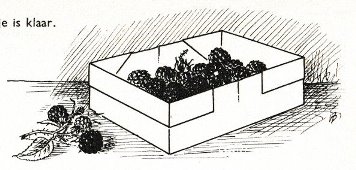
********** Stevig Doosje - The Magazine Cover Box
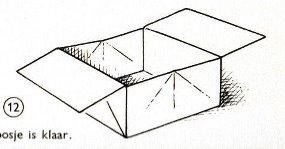
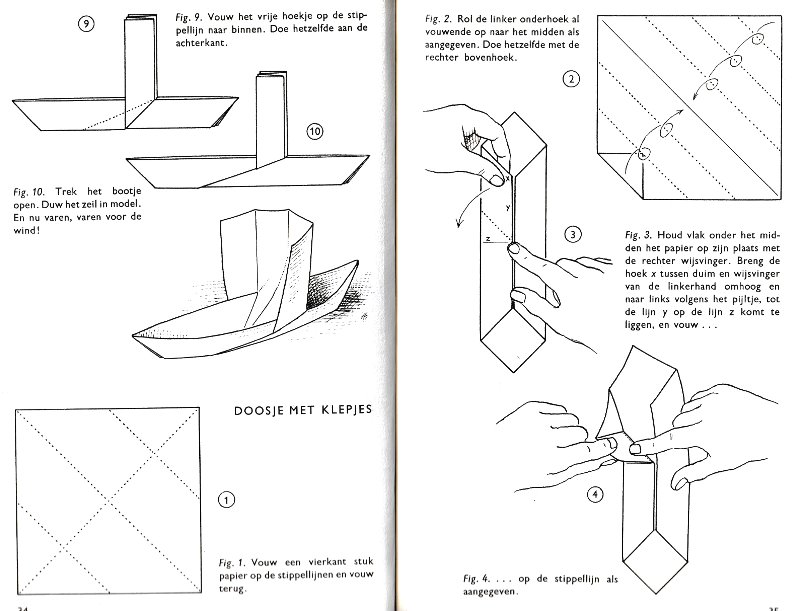
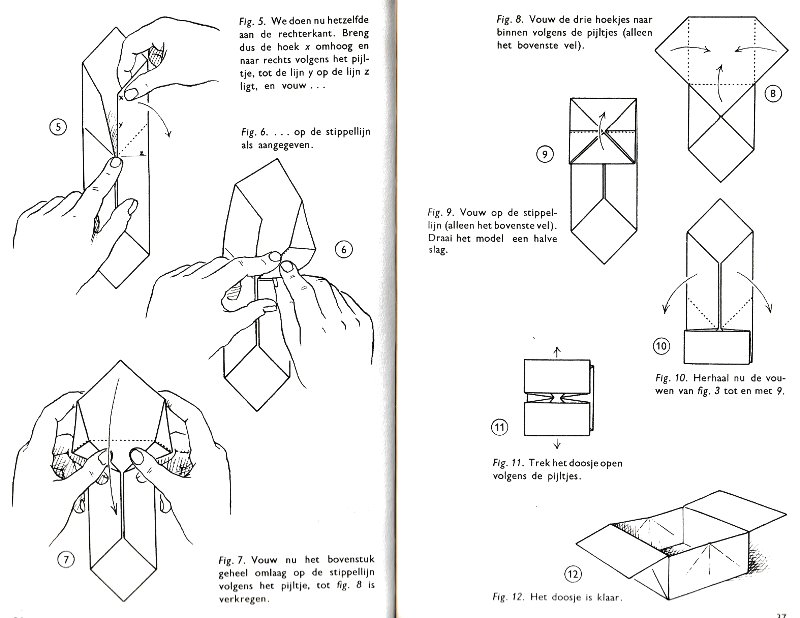
********** Doosje met klepjes - The Junk Box
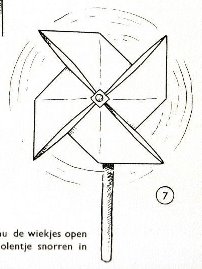
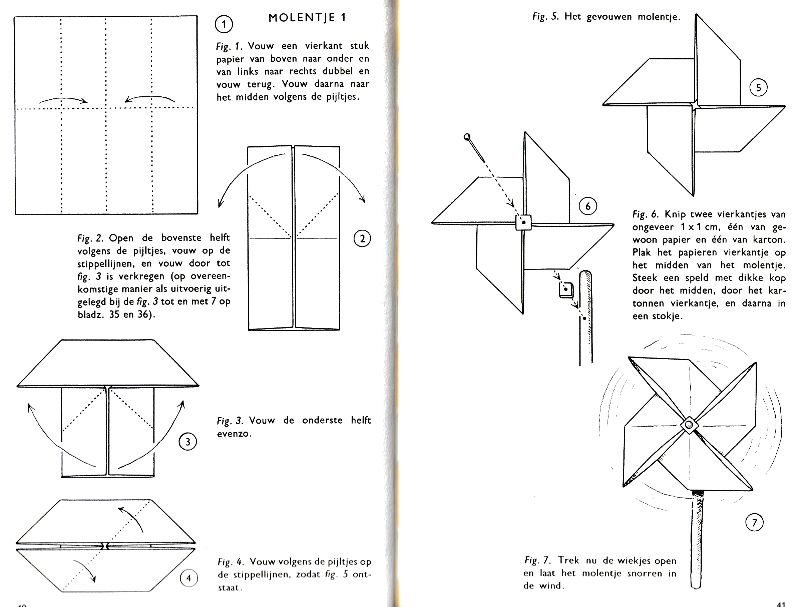
********** Molentje 1 - The Windmill
********** Molentje 2 - The Windmill
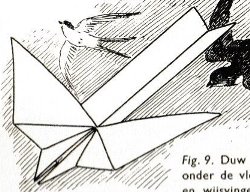
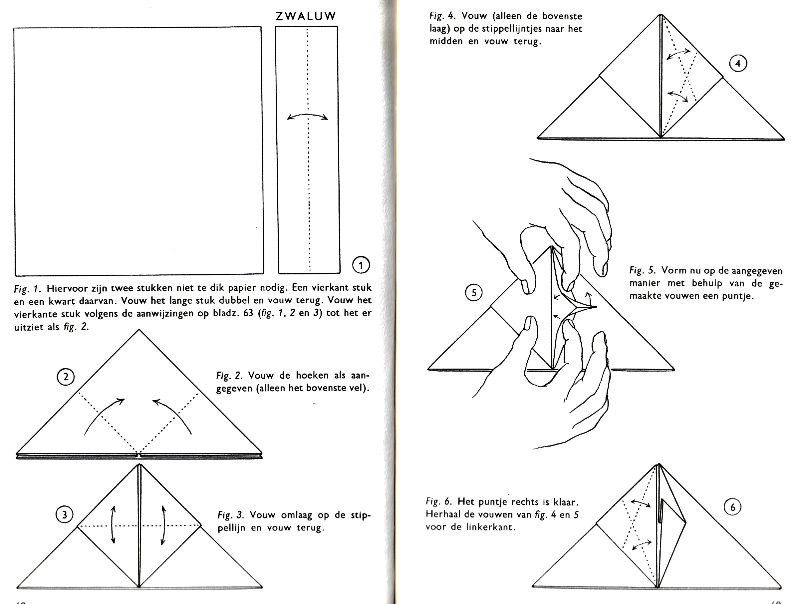
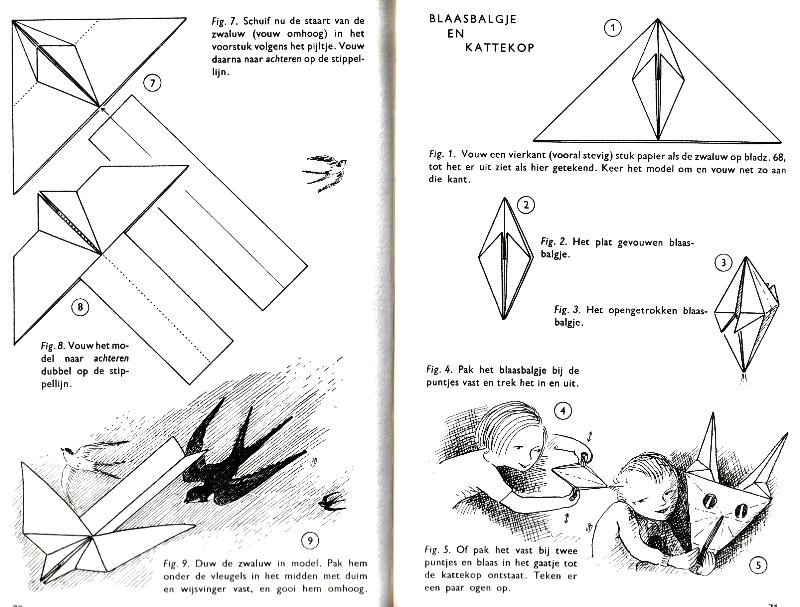
********** Zvaluw - The Swallow
********** Blaasbalje - The Bellows
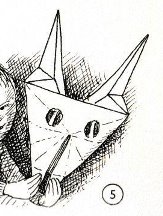
********** Kattekop - The Wild Man of Borneo
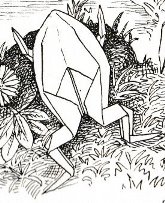
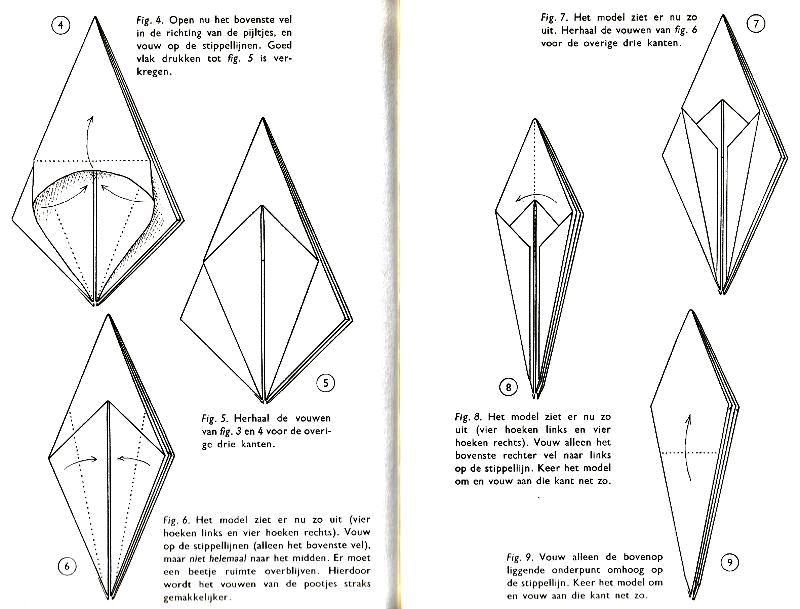
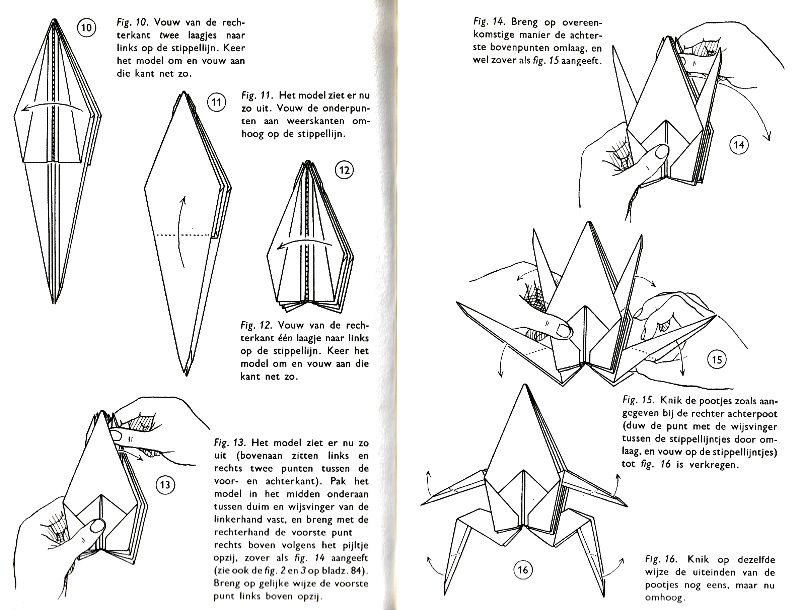
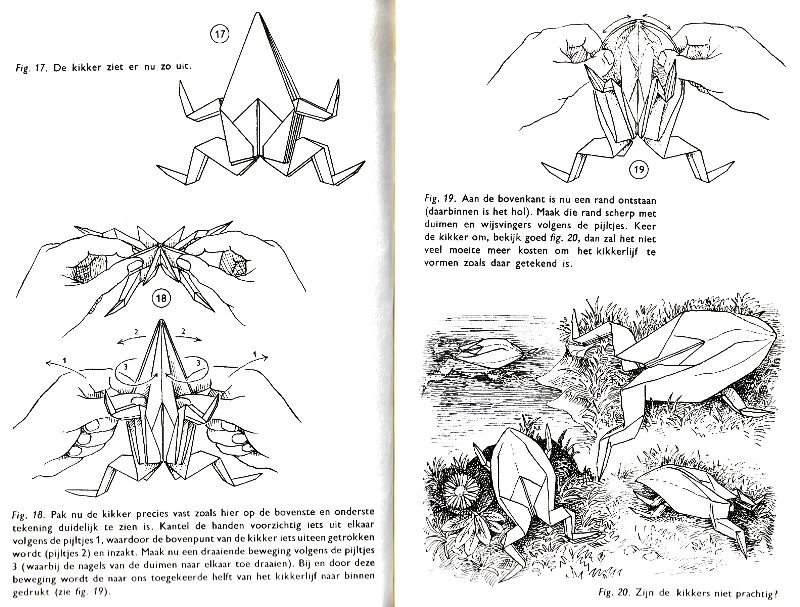
********** Kikker - The Blow-up Frog
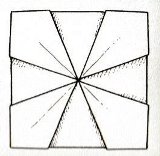
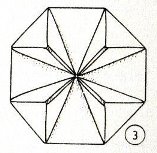
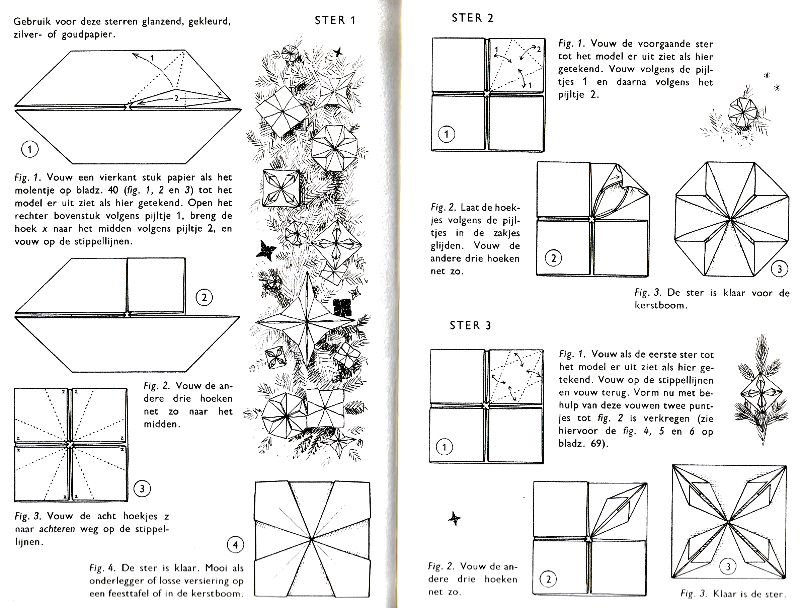
********** Ster 1
********** Ster 2
********** Ster 3
********** Ster 4
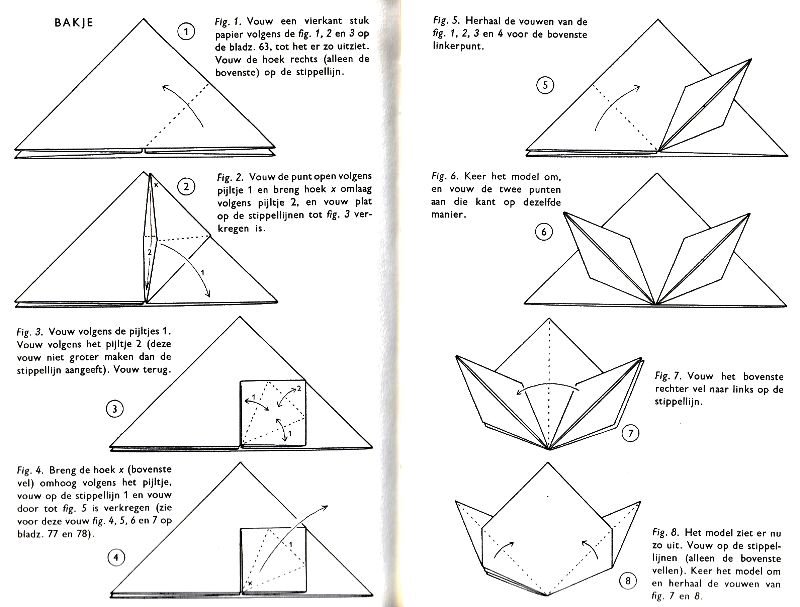
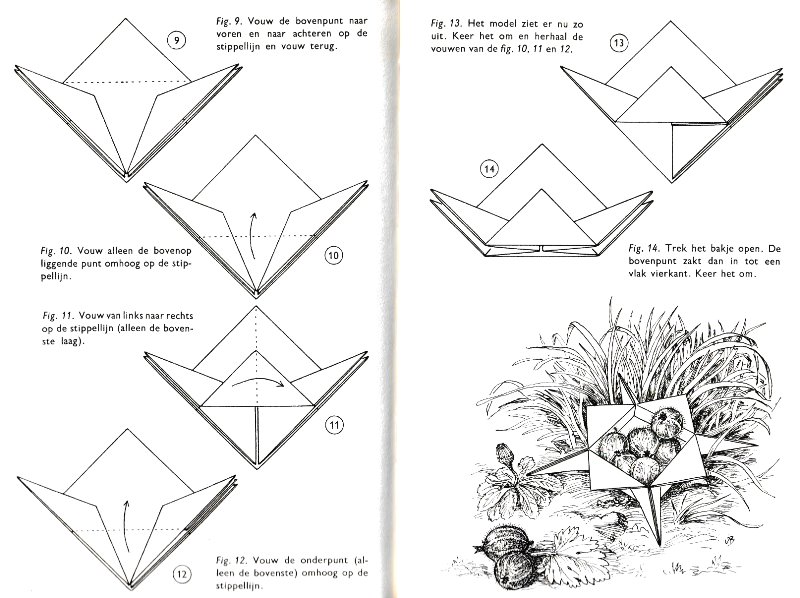
********** Bakje
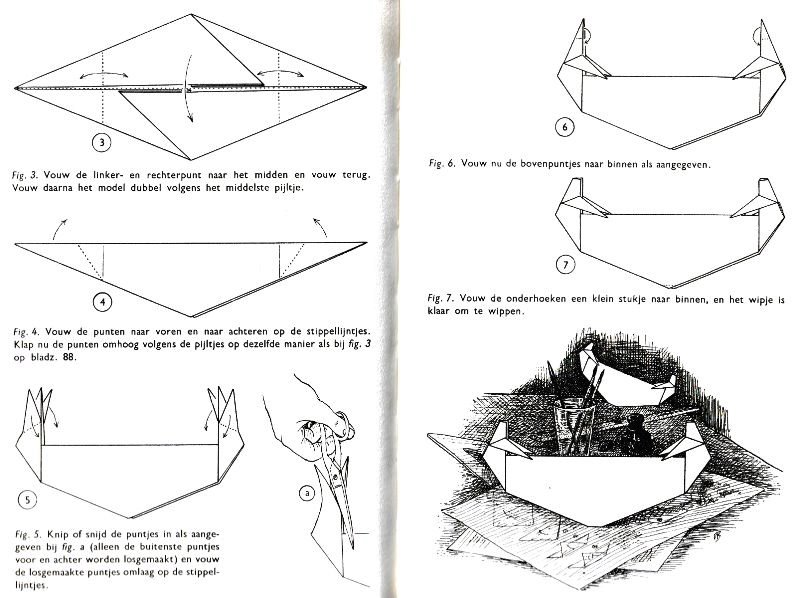
********** Wip (Cut)
********** The Work
********** |
|||||||