| The Public Paperfolding History Project
Last updated 9/12/2025 x |
|||||||
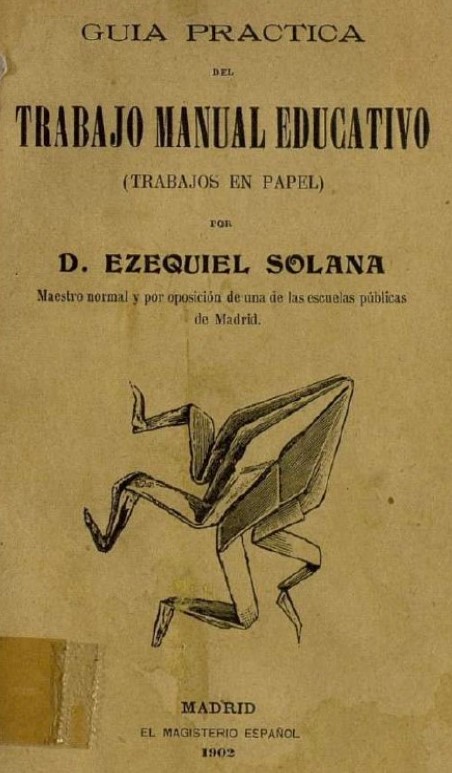
| Guia Practica del Trabajo Manual Educativo by Ezequiel Solana, 1902 | |||||||
| 'Guia
Practica del Trabajo Manual Educativo' by Ezequiel Solana
was published by Editorial Magisterio Español in Madrid
in 1902. Inter alia it contains chapters on Plegado de
papel, Entrelazado y trenzado and Recortado all of which
contain paperfolding material. A full copy of the text of
these chapters is given at the foot of this page. I am grateful to Juan Gimeno for providing me with a copy of this work. There have been many editions of this work (though many of them are possibly just reprintings). Those I have been able to find some information on are: 1st - 1902 - 160 pages 2nd - no information 3rd - 1904 - 160 pages 4th - 1907 - 160 pages. A copy of this edition can be found online here. As far as I can tell the information about paperfolding is identical to that in the first edition. 5th - no information 6th - no date - 195 pages 7th - no information 8th - 1931 - 248 pages 9th - 1934 - 219 pages 10th - 1942 - no information about the page count 11th - 1959 - 268 pages 12th - 1962 - 262 pages The 1934 9th edition contains additional material that is not in the 1902 first edition and has its own page here. The additions may quite possibly have been made in an earlier edition, possibly in a much earlier one, but I have no information on this point. If anyone can provide further information to clarify the date, page count or content of any of the other editions I will be truly grateful. **********
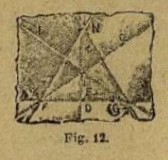
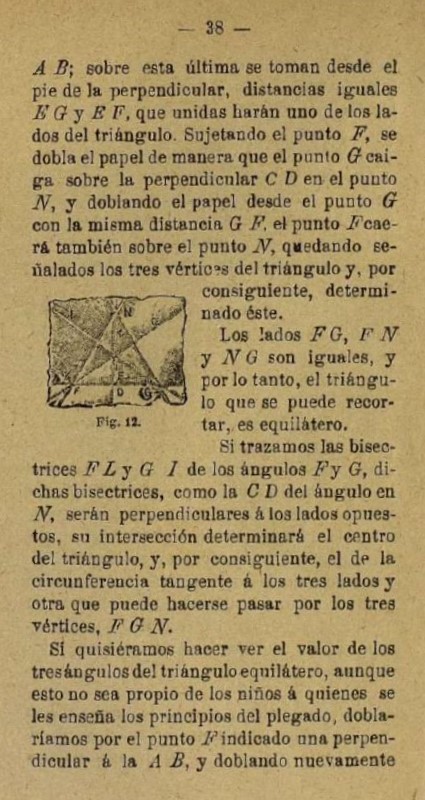
********** Analysis Plegado de papel - Figuras geometricas This section of the work begins with some preliminary folding exercises then shows how to create various polygons and how to demonstrate some of their properties by folding (and cutting). For full details see below. Constructing the Equilateral Triangle (using what seems to be an unnecessarily complex method)
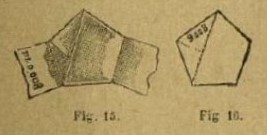
********** The Pentagonal Knot
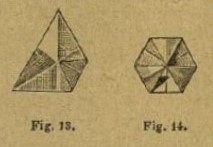
********** Constructing a Regular Hexagon from an Equilateral Triangle
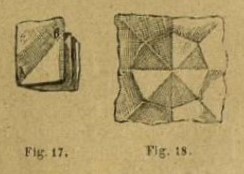
********** Constructing a Regular Octagon
********** Plegado de papel - Formas de objetos usuales Papelera (waste paper basket) first method I presume that these two Papeleras are intended to be hung on a wall.
********** Papelera (waste paper basket) second method
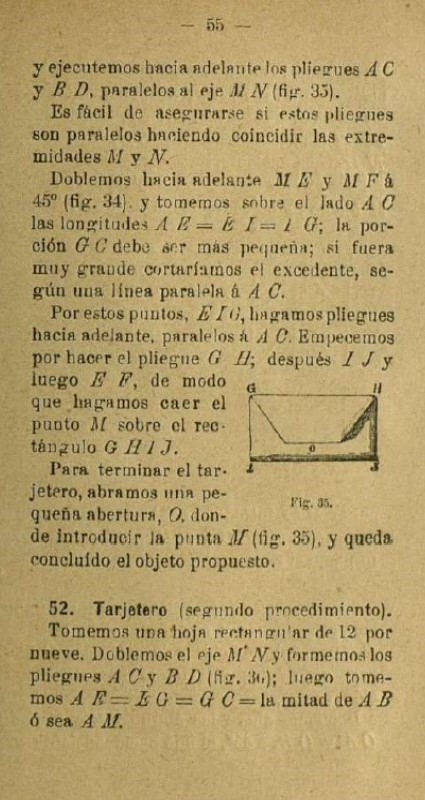
********** Tarjetero (Visiting card holder) - Version 1
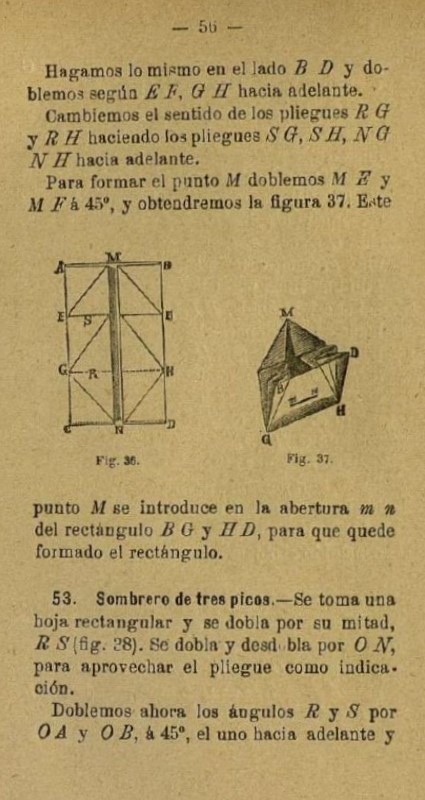
*** Tarjetero (Visiting card holder) - Version 2
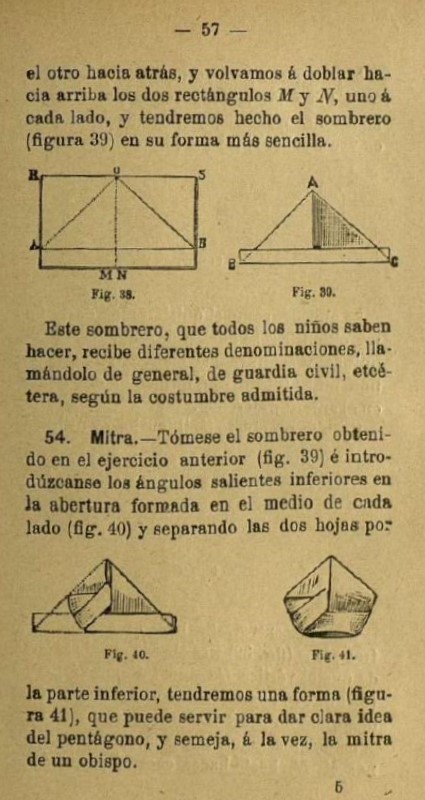
********** Sombrero de tres picos - first version - The Newspaper Hat
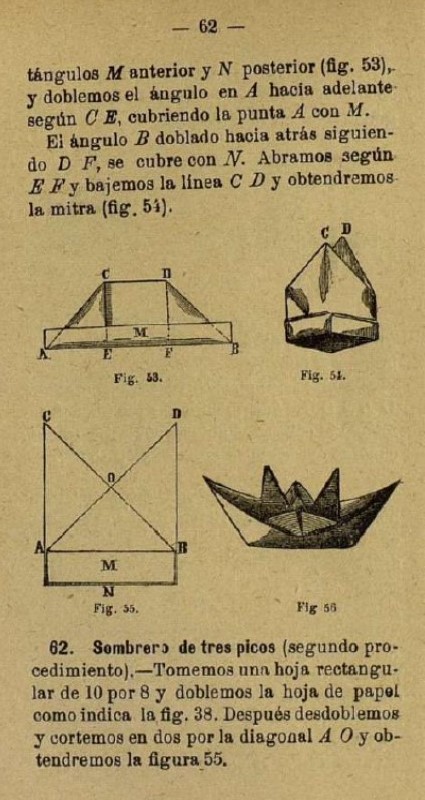
********** Mitra - The Mitre
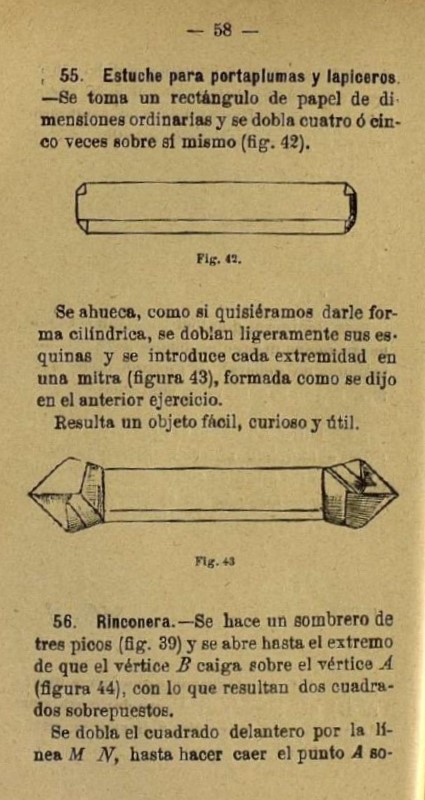
********** Estuche para portaplumas y lapiceros - The Pencil Case
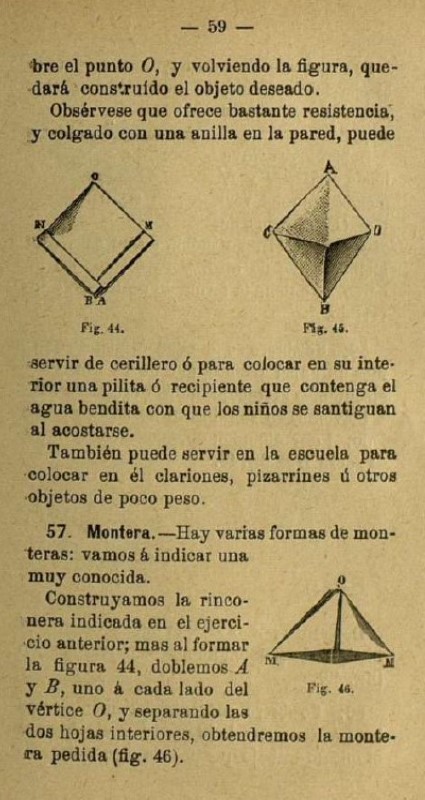
********** Rinconera - The Wall Pocket
********** Montera - The Pyramidal Hat
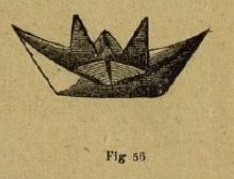
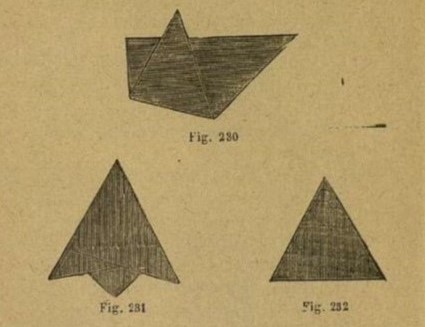
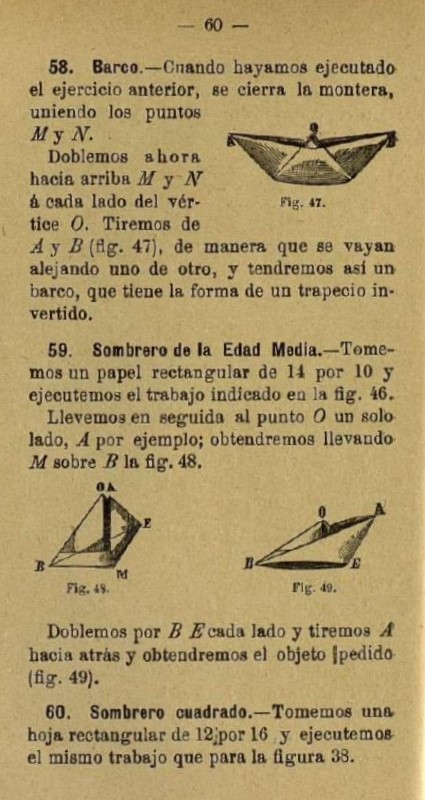
********** Barco - The Paper Boat
********** Sombrero de la Edad Media -
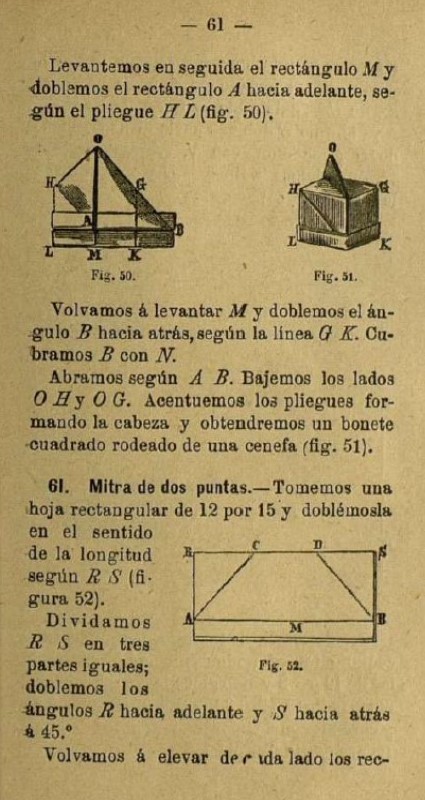
********** Sombrero cuadrado - Le Bonnet Carre
********** Mitra de dos puntas - a variant of The Wide Hat
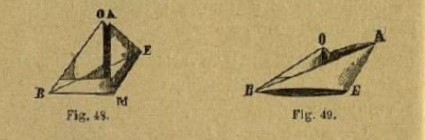
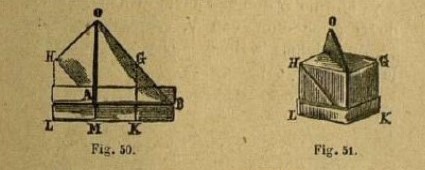
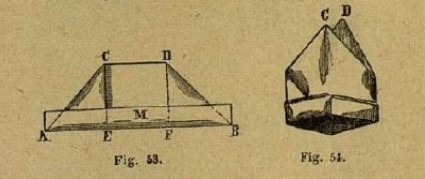
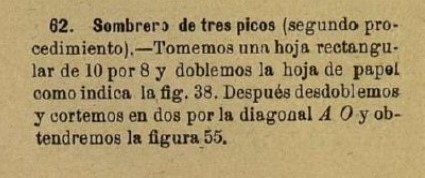
********** Sombrero de tres picos - second version (cut) I am unable to reconstruct this design from the instructions.
********** Barco con tres mastiles - a variation of The Paper Boat
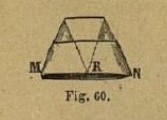
********** Sombrero de magico - The Magic Hat
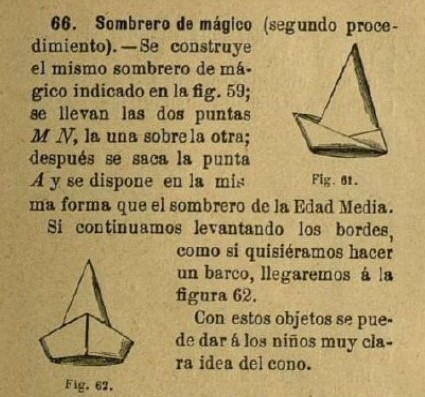
********** Sombrero de magico (second method) -
********** Gorra sin visera (cap without visor)
********** Tronadera - The Paper Banger
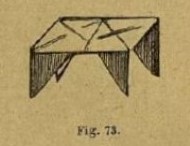
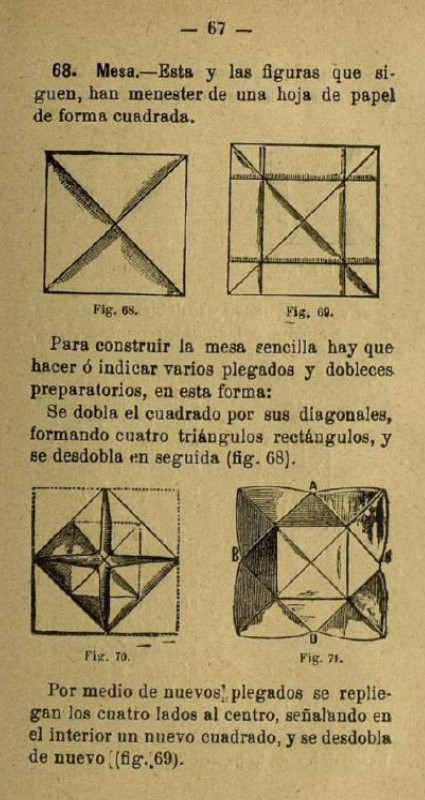
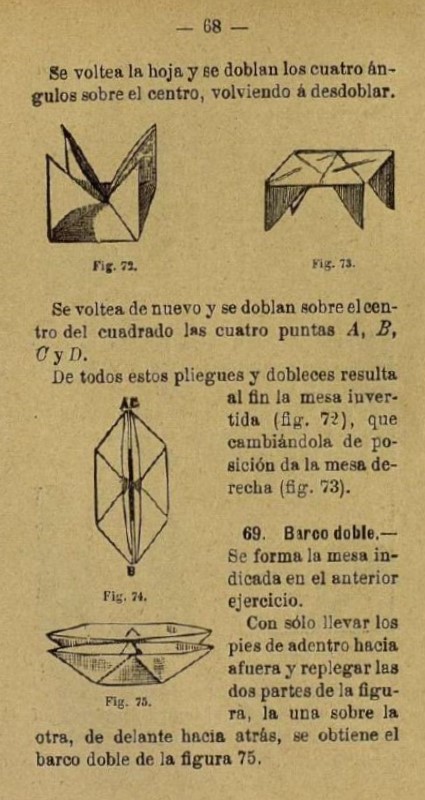
********** Mesa - The Table
********** Barco Doble - The Double Boat
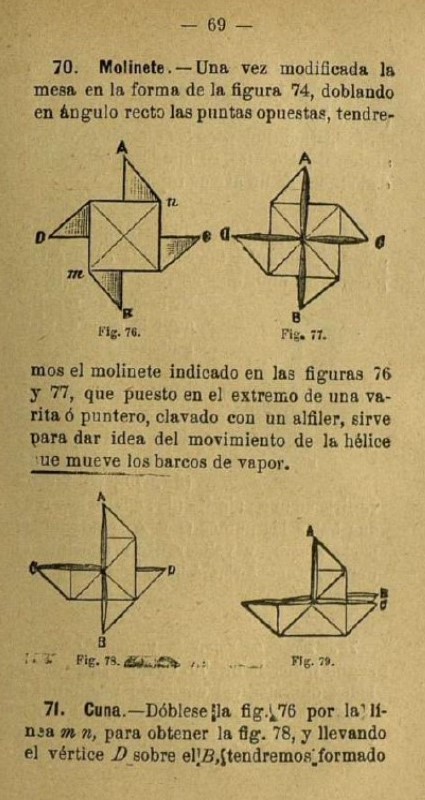
********** Molinete - The Windmill
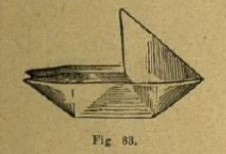
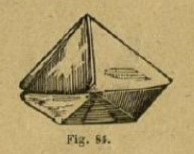
********** Cuna - The Boat with Sail
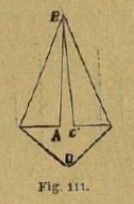
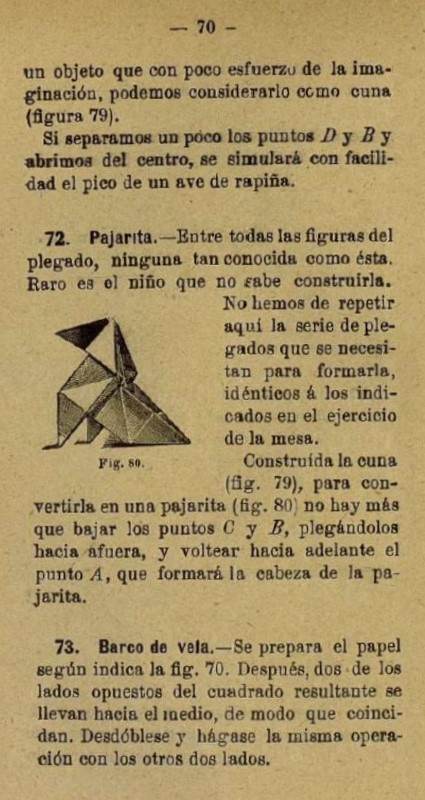
********** Un ave de rapina (beak of a bird of prey) - The Monster Fish The following paragraph reads, roughly translated: 'If we separate points D and B a little and open them from the centre the beak of a bird of prey will be easily simulated.' There is no illustration to accompany this explanation.
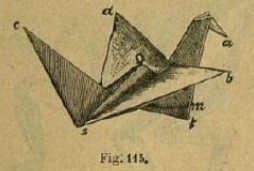
********** Pajarita - The Cocotte / Pajarita The author notes, 'Among all the folding figures none is as well-known as this one. Rare is the child who does not know how to make it.'
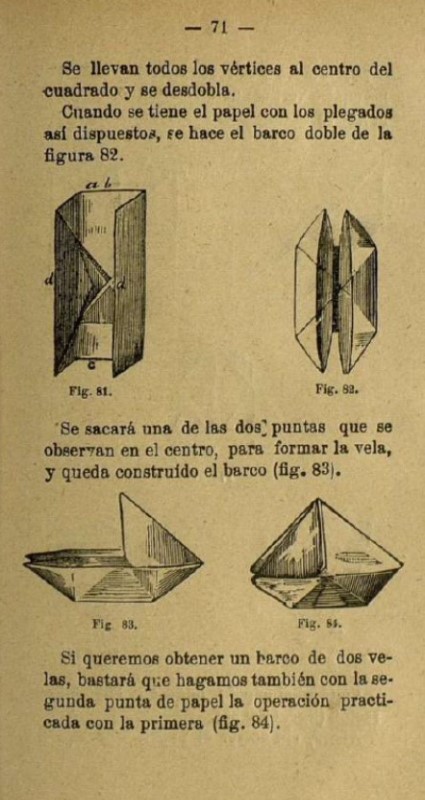
********** Barco de vela - with one sail - The Double Boat with Sail
********** Barco de vela - with two sails - The Double Boat with Two Sails
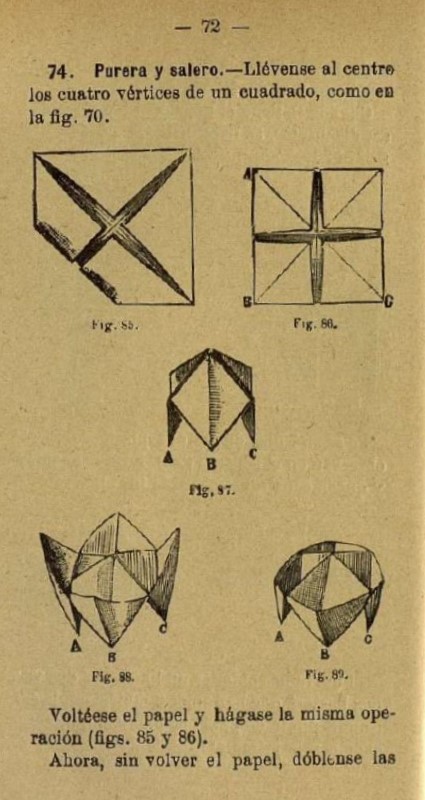
********** Purera y salero - The Salt Cellar
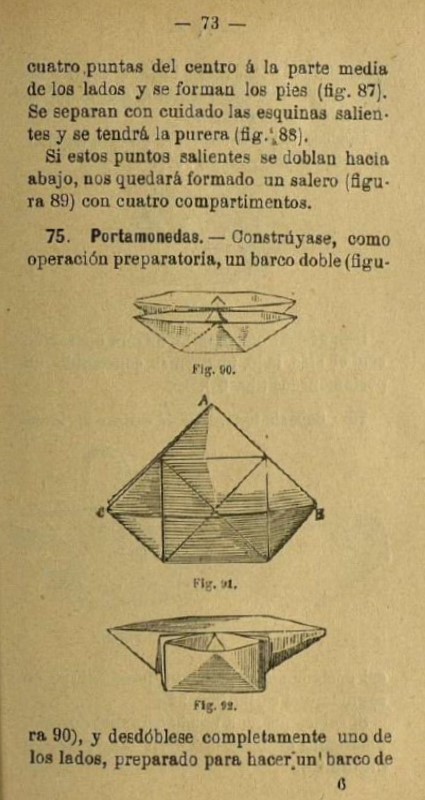
********** Portamonedas - The Portfolio
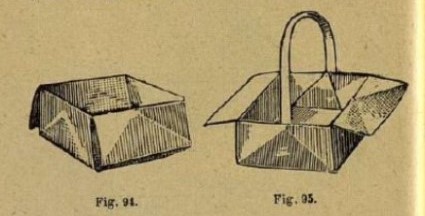
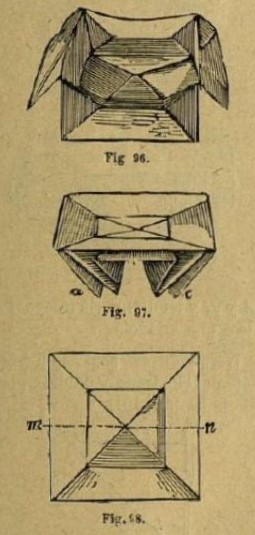
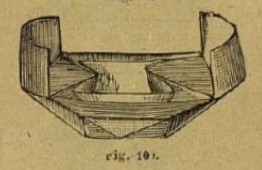
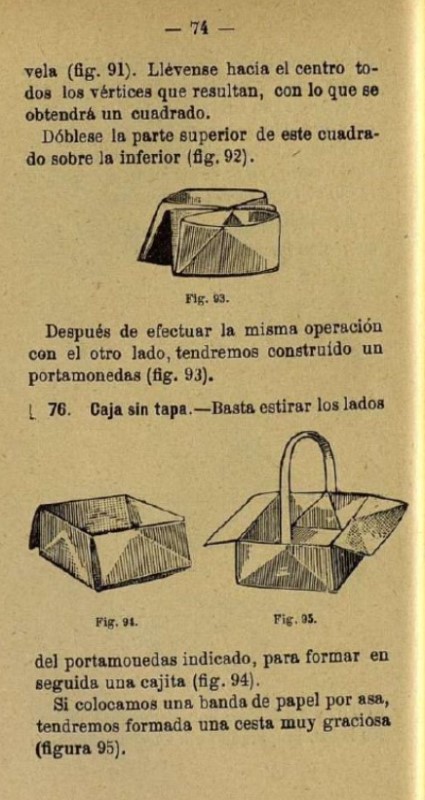
********** Caja sin tapa - The Junk Box and Junk Box Basket
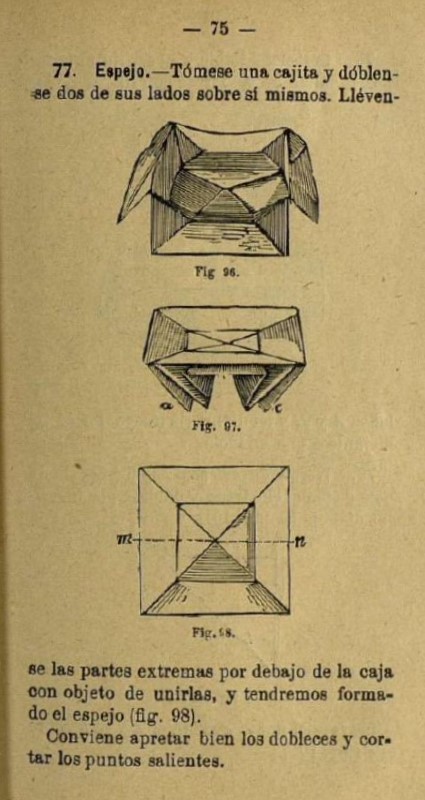
********** Espejo - The Looking Glass
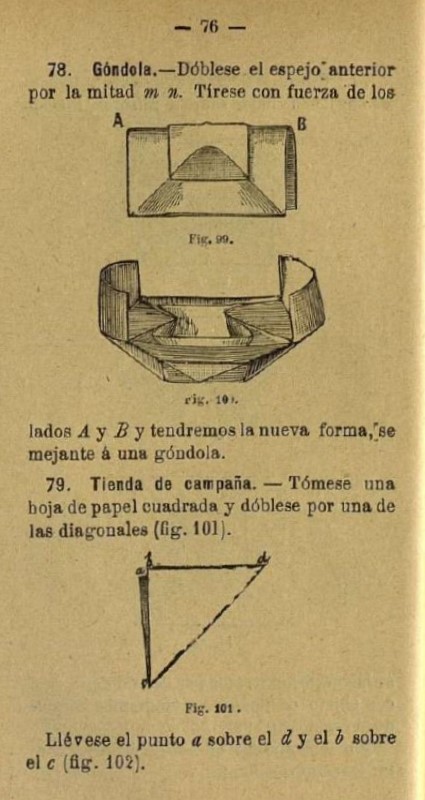
********** Gondola - The Chinese Junk
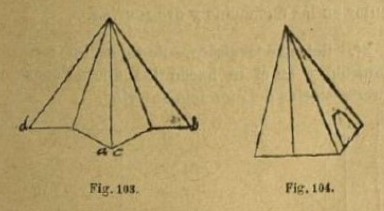
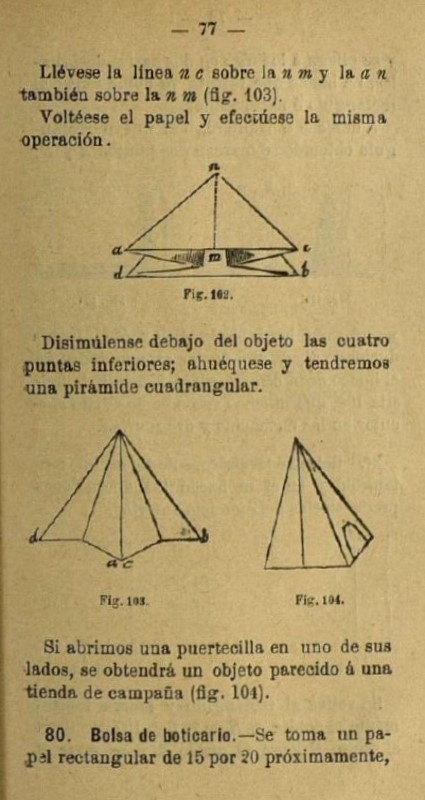
********** Tienda de campana - The Waterbomb Base Tent (cut)
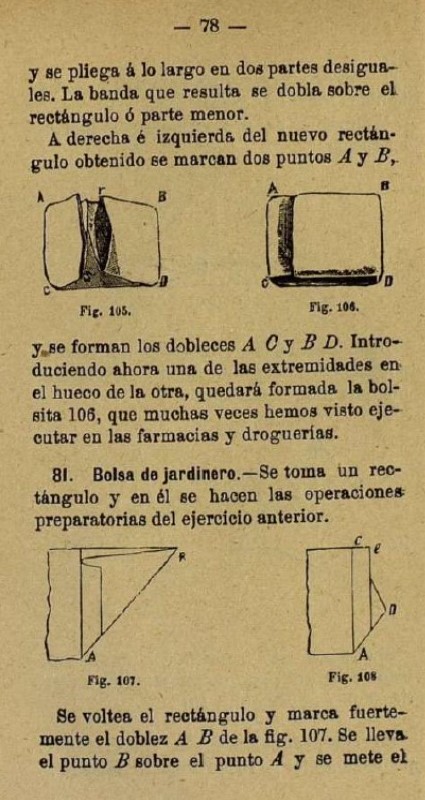
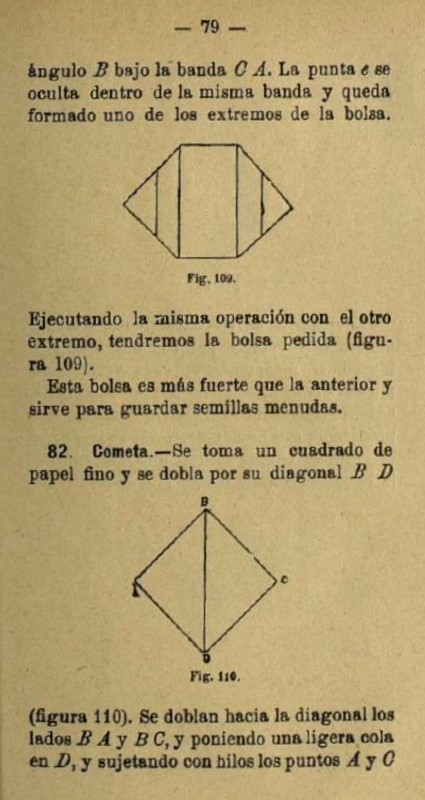
********** Bolsa de botacario - The Rectangular Packet
********** Bolsa de jardinero - The Hexagonal Packet
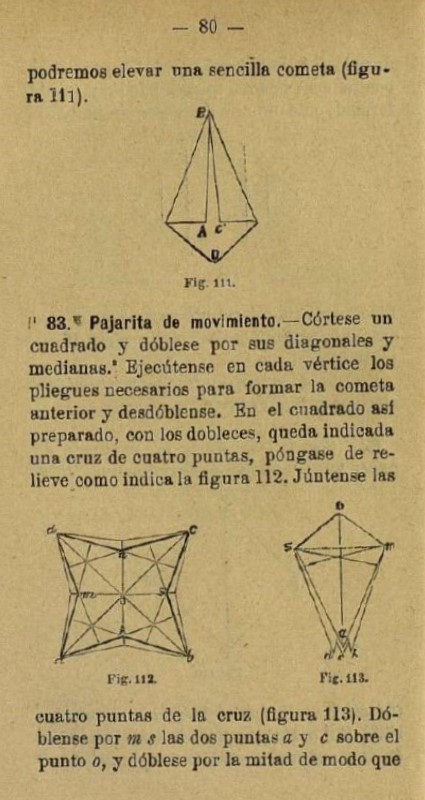
********** Cometa - The Flyable Kite
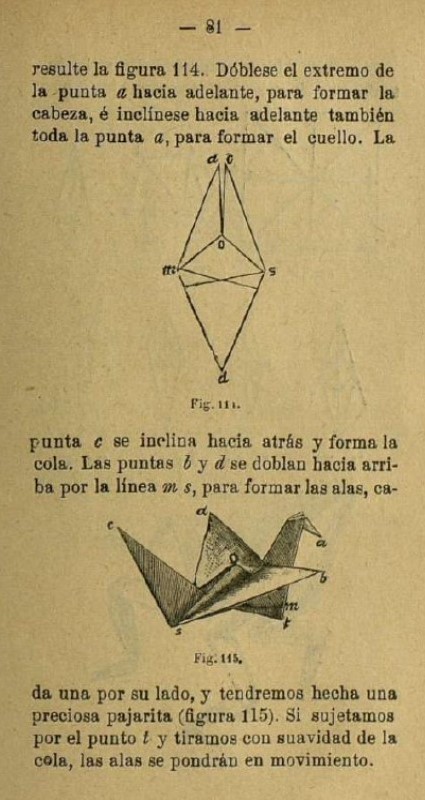
********** Pajarita de movimiento - The Flapping Bird
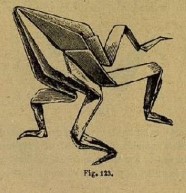
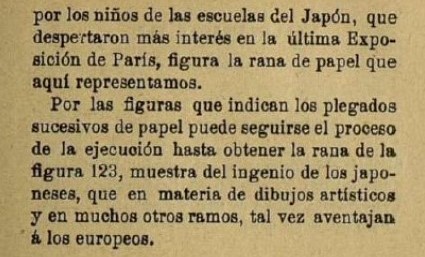
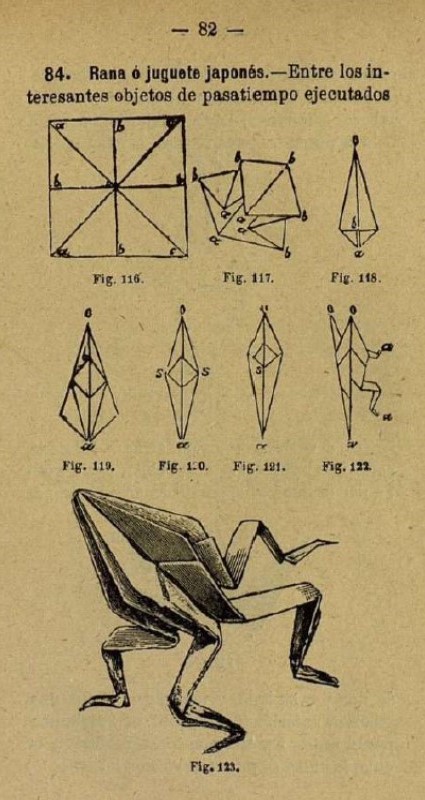
********** Rana o juguete japones - The Inflatable Frog The wording says, roughly translated: 'Among the interesting toys made by Japanese schoolchildren which attracted the most interest at the last Paris Exhibition is the paper frog we present here ... a demonstration of the ingenuity of the Japanese who matters of in artistic drawing, and in many other branches, perhaps surpass the Europeans.' The 'Paris Exhibition' is presumably the Exposition Universelle of 1900.
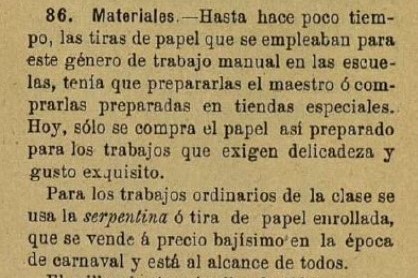
********** Entrelazado The introduction to this section suggests that instead of having to make strips for this purpose carnival streamers can be used instead.
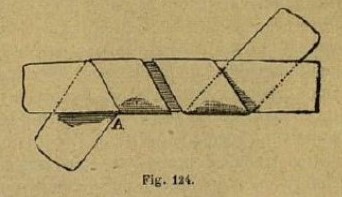
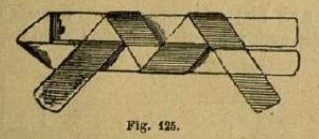
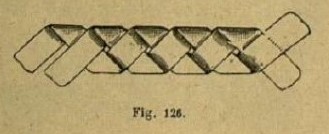
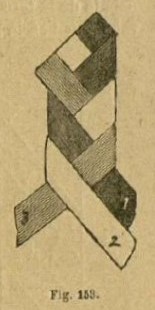
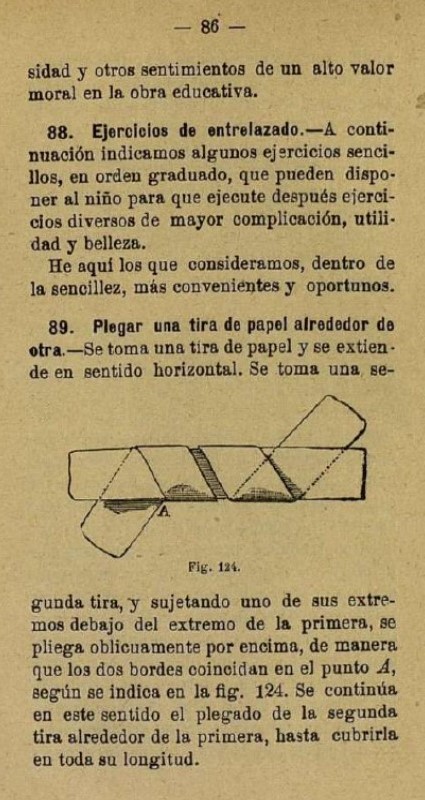
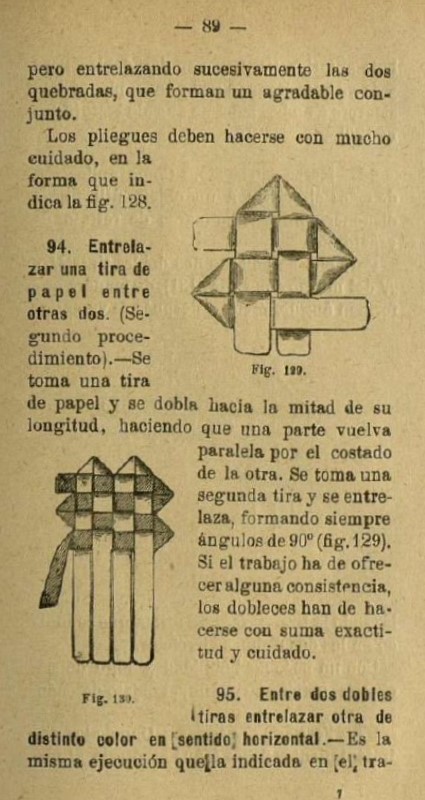
********** Braiding Folding one strip of paper around another
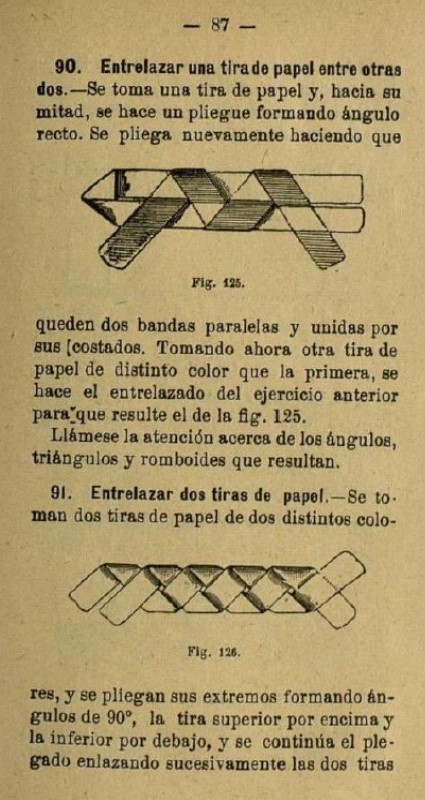
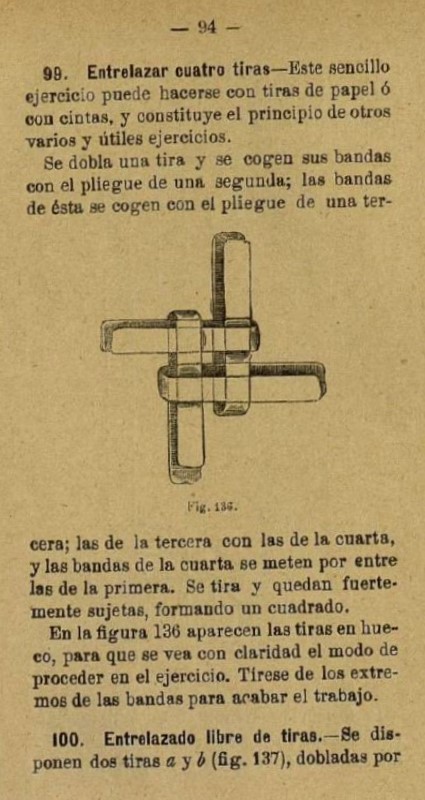
********** Interlacing a strip of paper wth two others
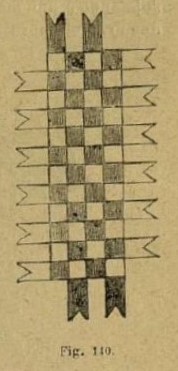
********** Interlacing two strips of paper
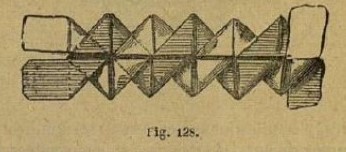
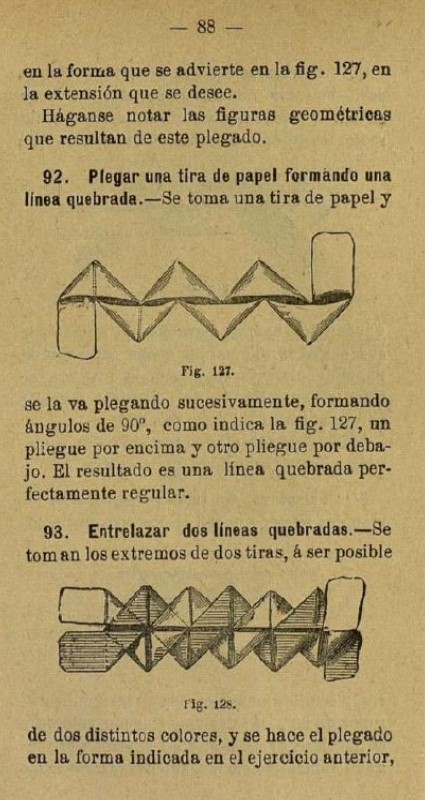
********** Interlacing two zigzag lines
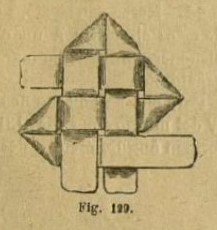
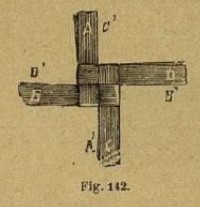
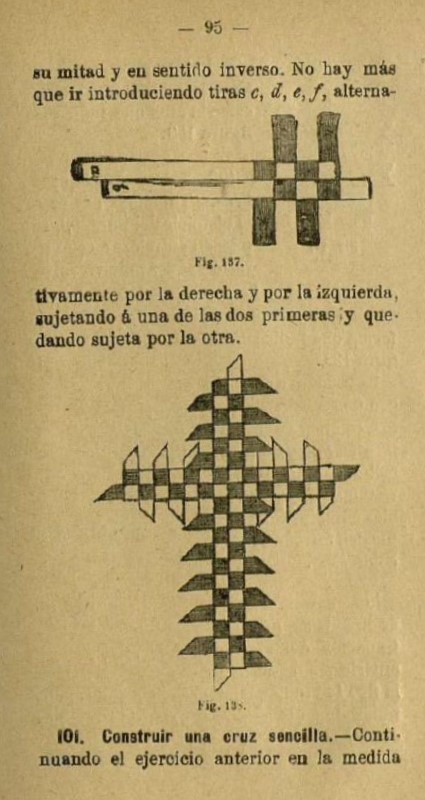
********** Interlacing two strips at right angles
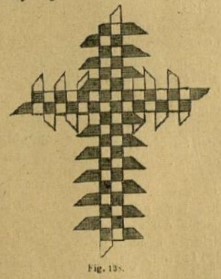
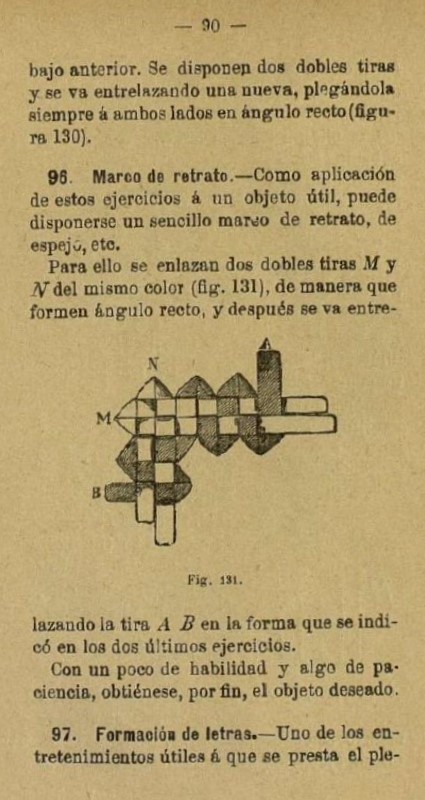
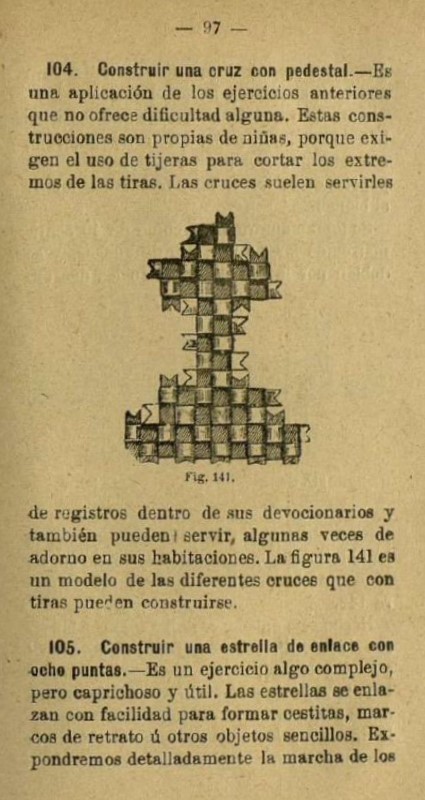
********** Using these techniques to make a frame
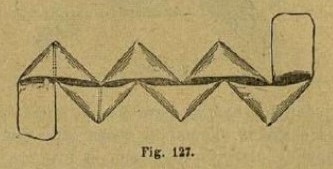
********** Borders and Corners Folding a strip of paper into a zigzag line
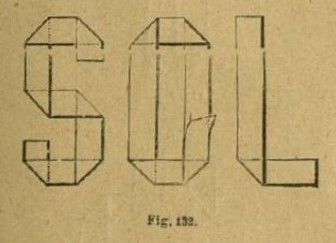
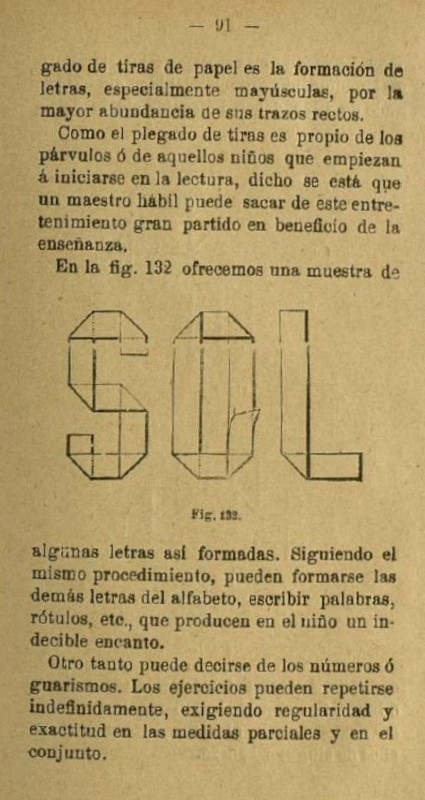
********** Formacion de letras - Paper Alphabets
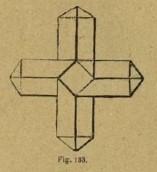
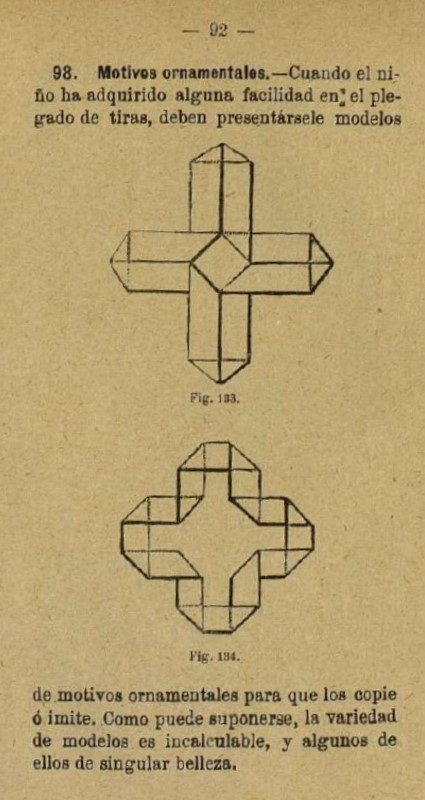
********** Motivos Ornamentales - Verschnuren
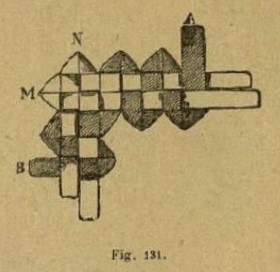
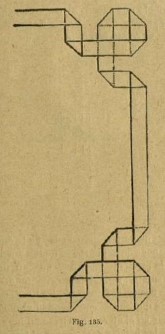
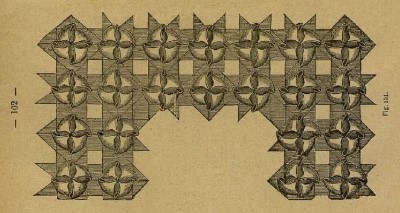
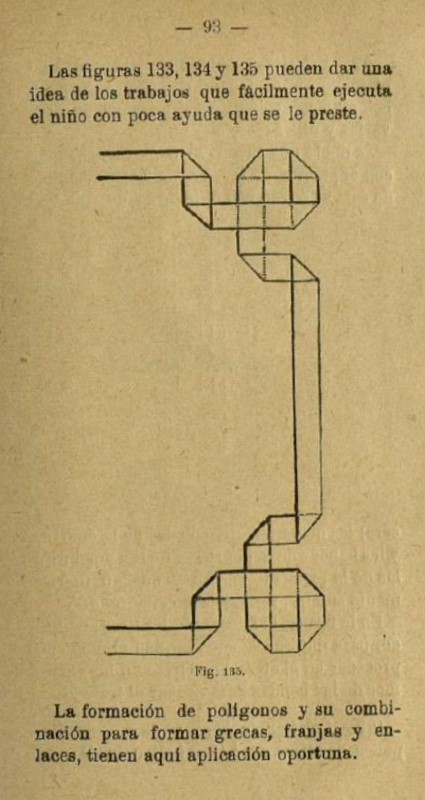
********** Borders and Corners
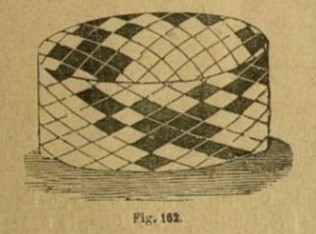
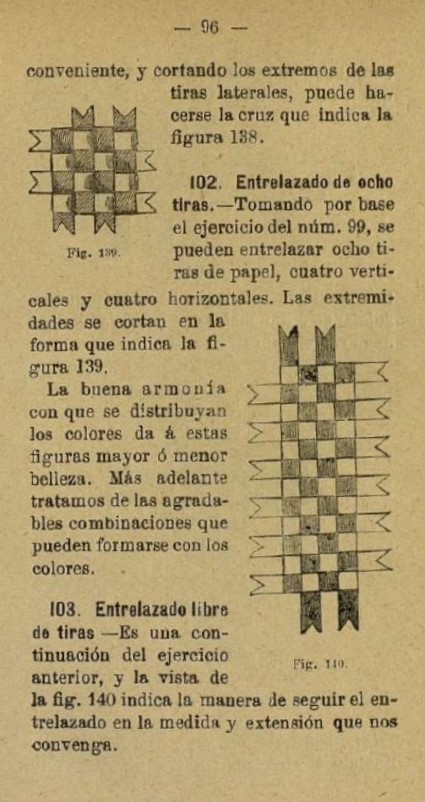
********** Free Weaving
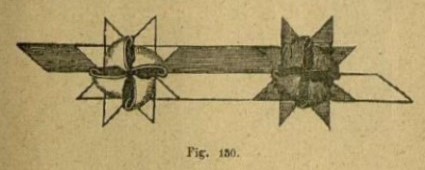
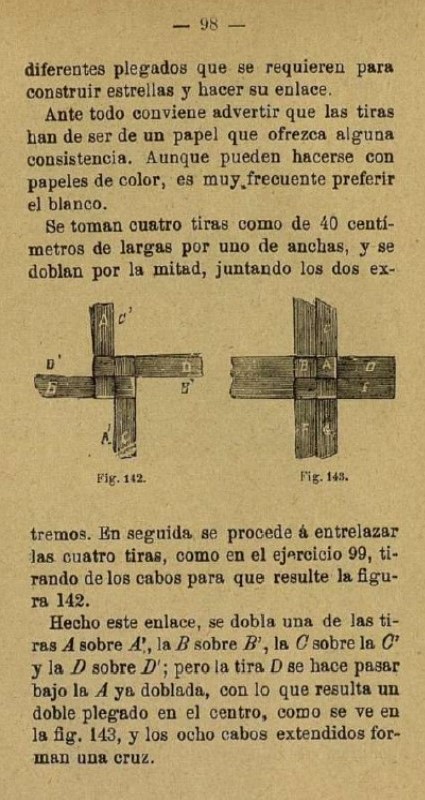
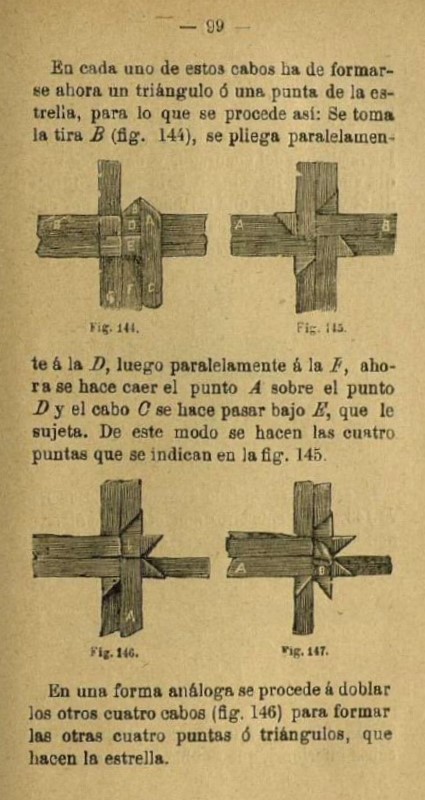
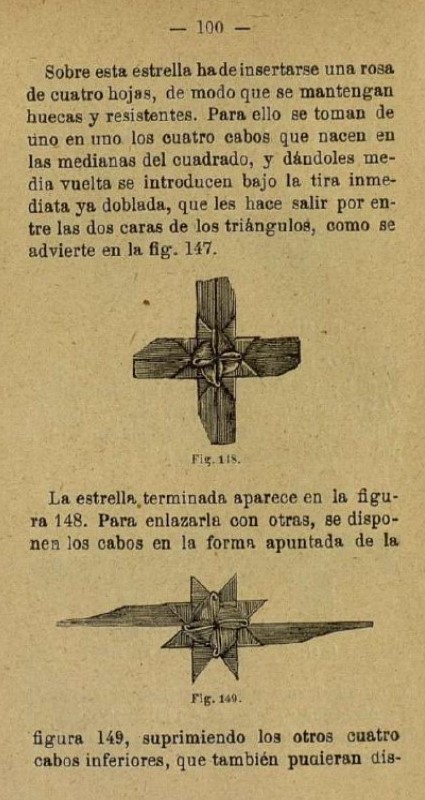
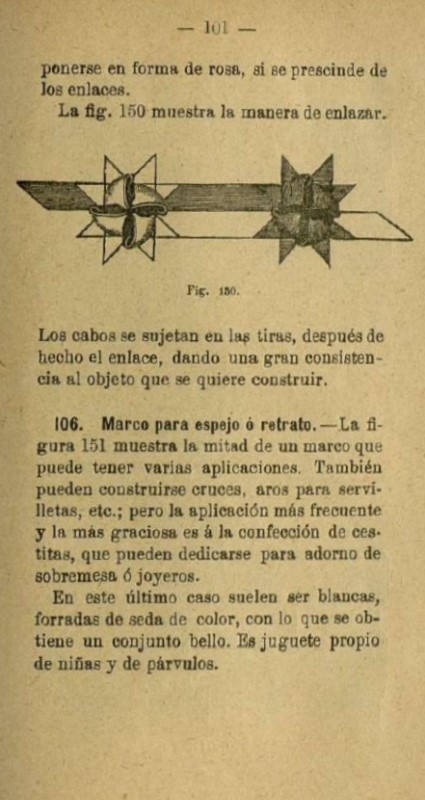
********** Una estrella de enlace con ocho puntas - The Paper Rosette
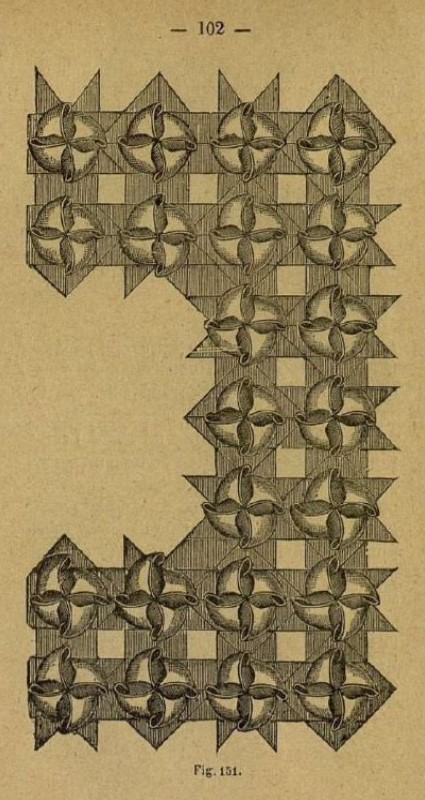
*** Frame for a mirror or portrait
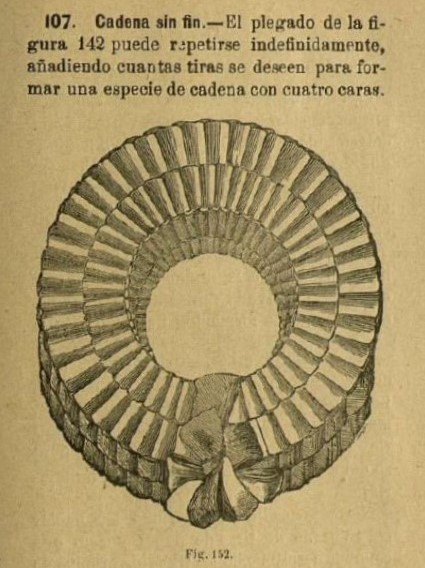
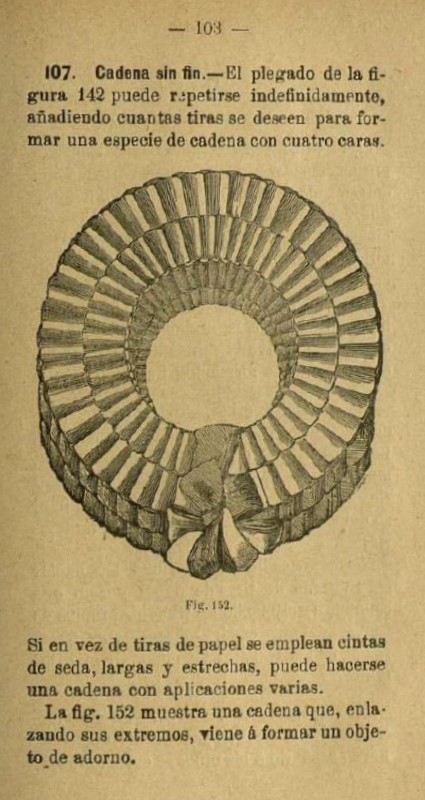
********** Cadena sin fin - Endless Chain
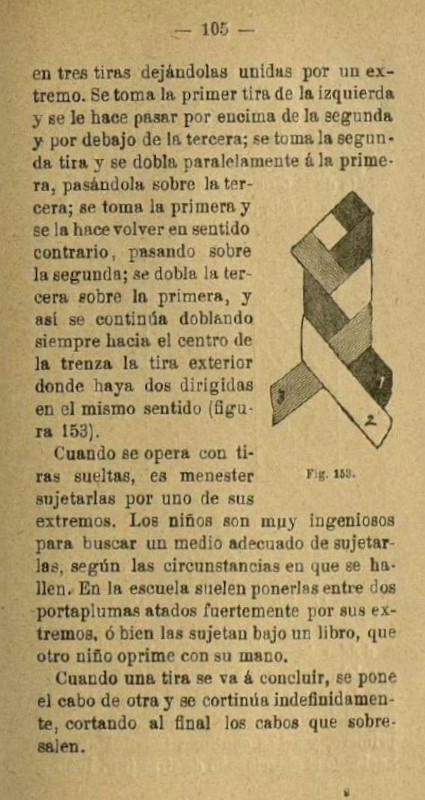
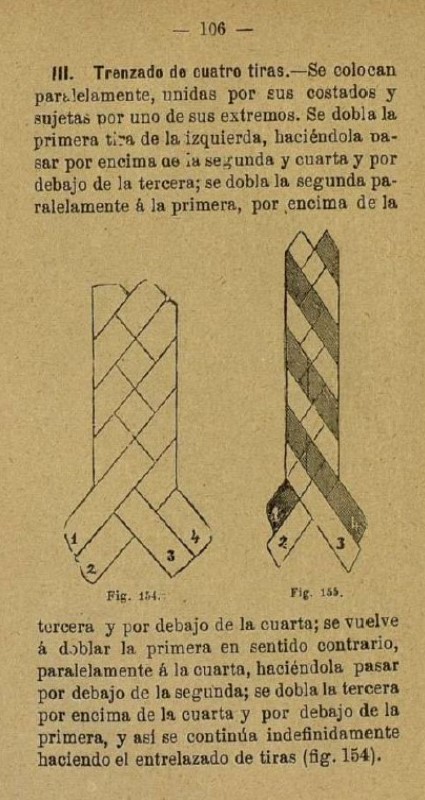
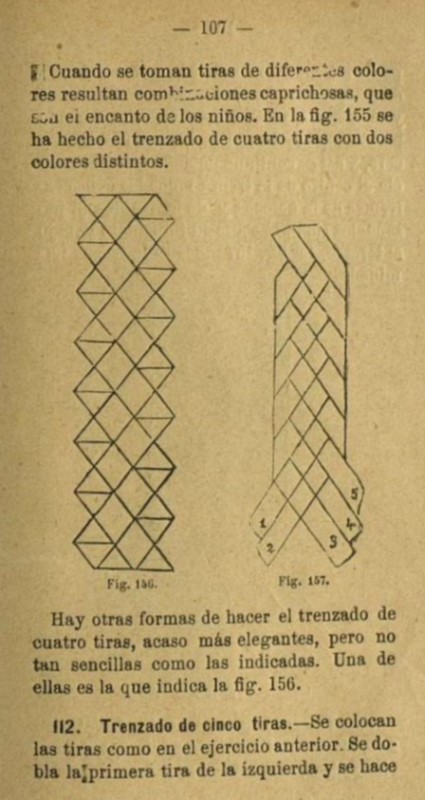
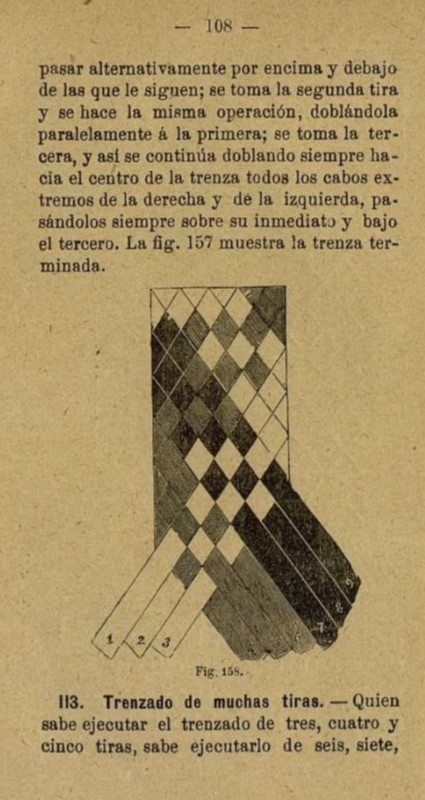
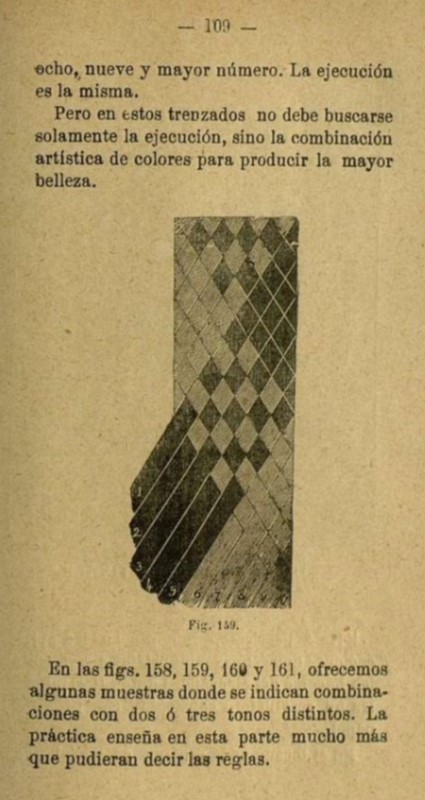
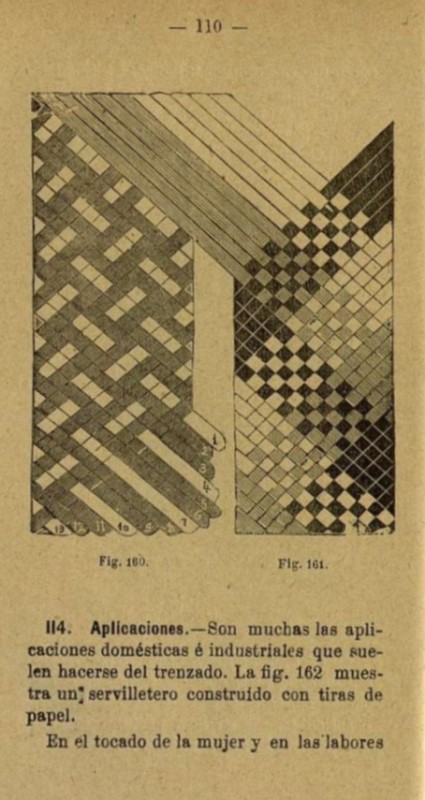
********** Del Trenzado This section of the work begins with the braiding of three connected strips, then three unconnected strips, then four and five strips in various complex ways, culminating in the braiding of a napkin ring.
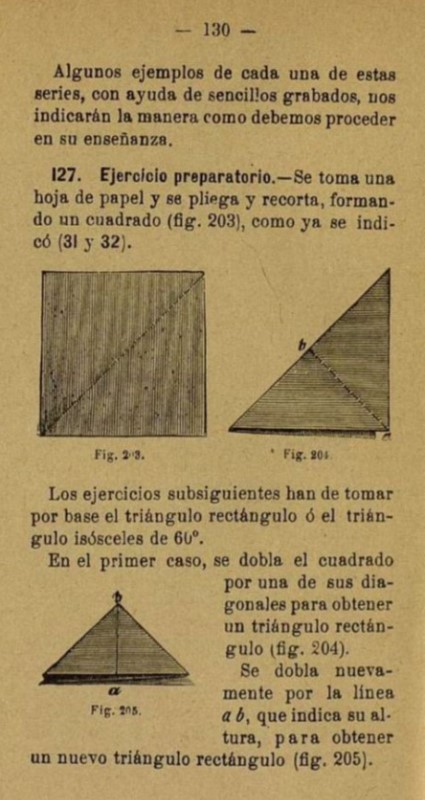
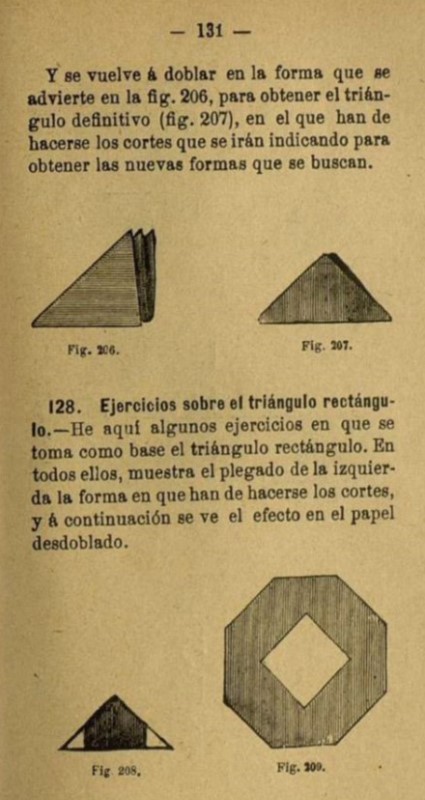
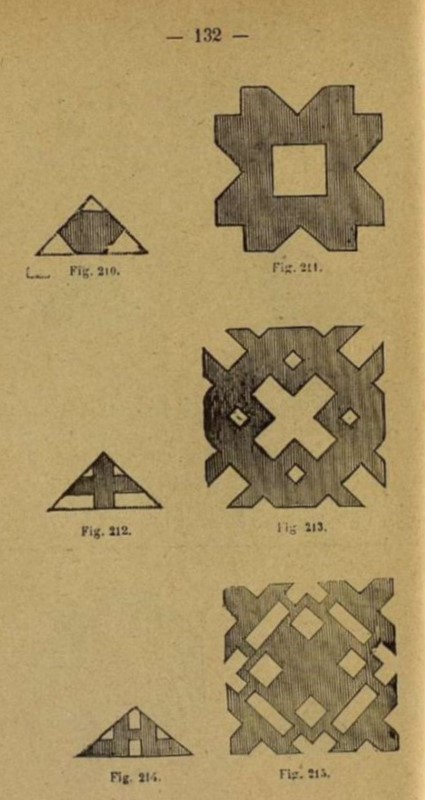
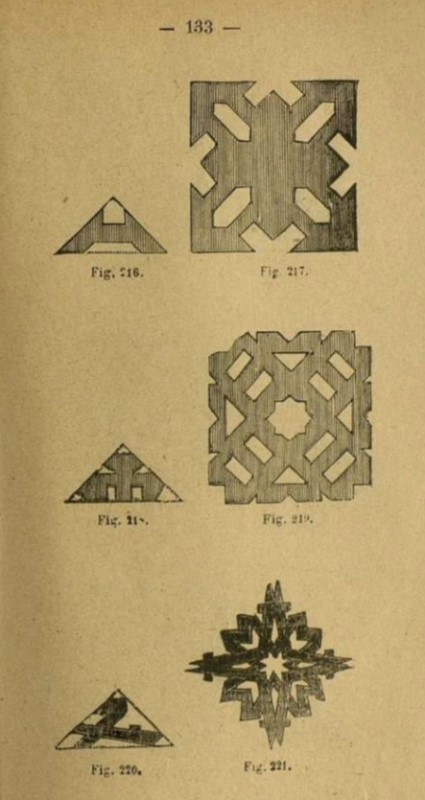
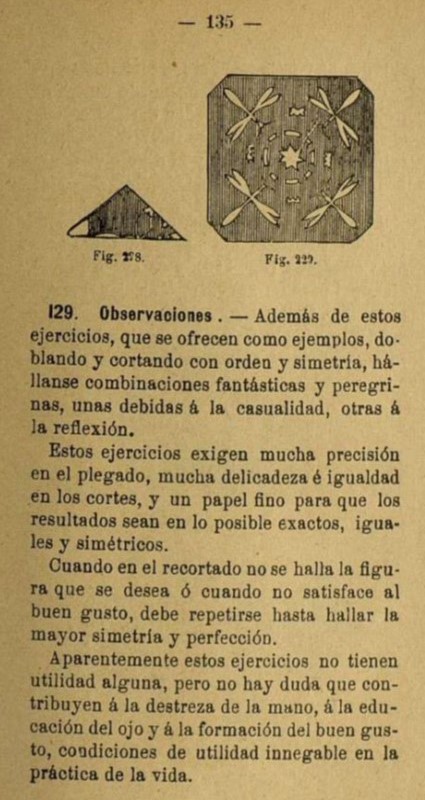
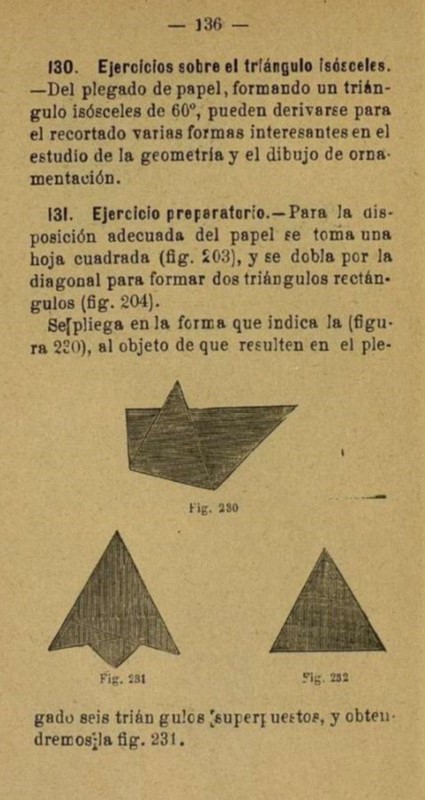
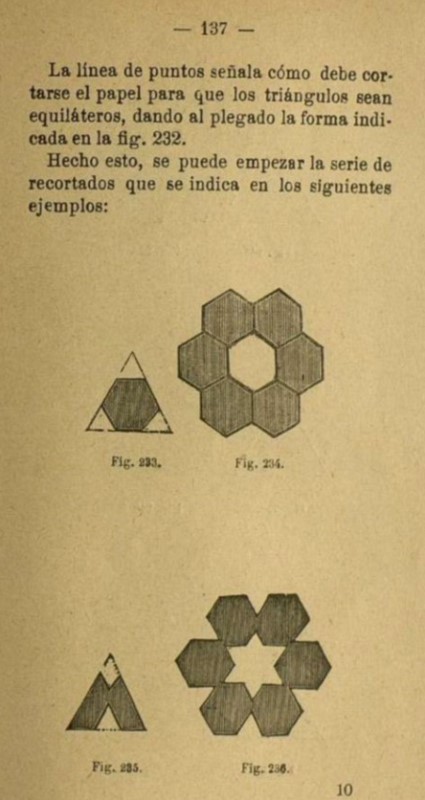
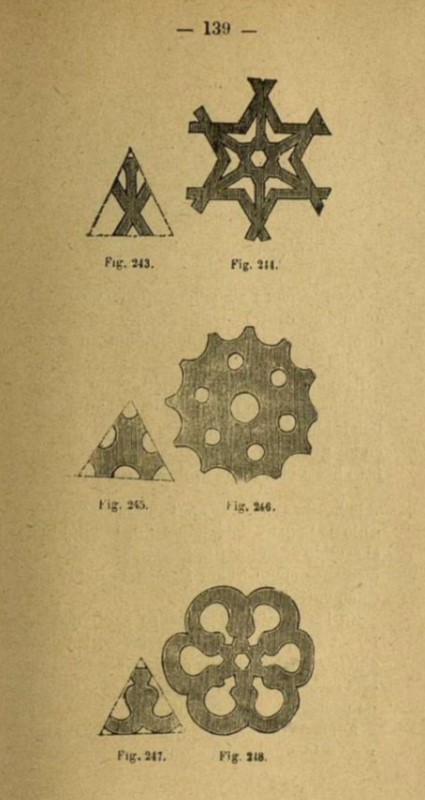
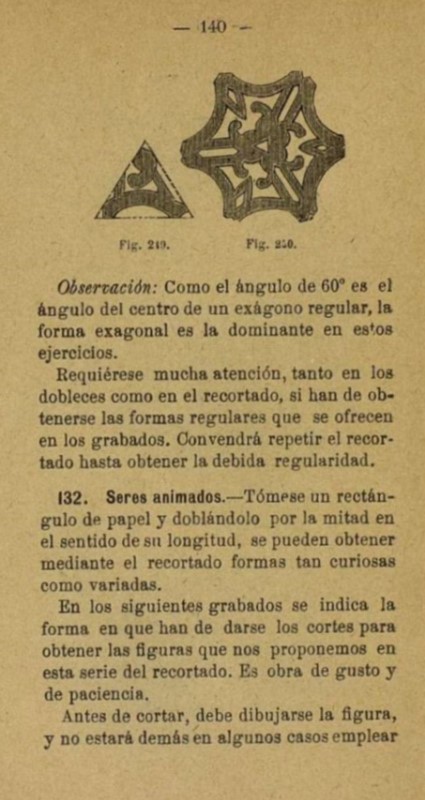
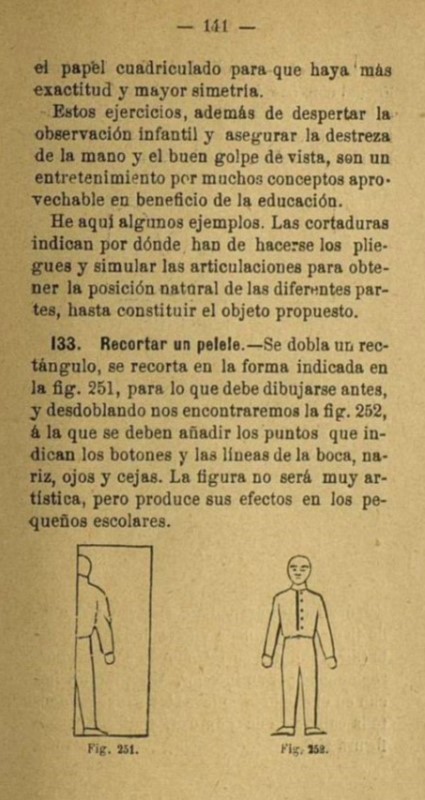
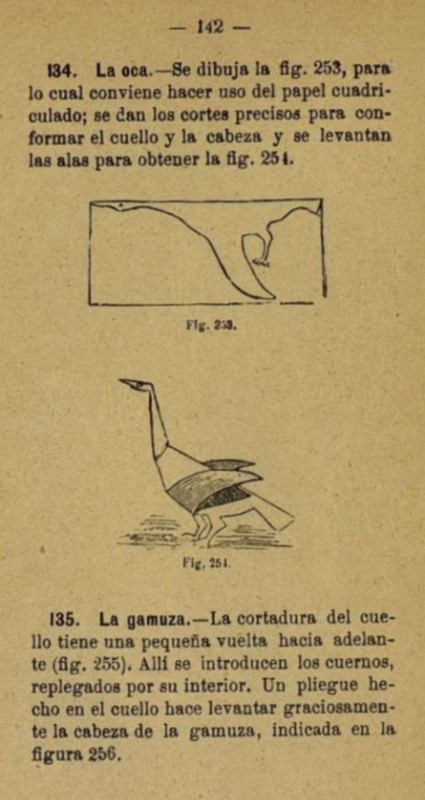
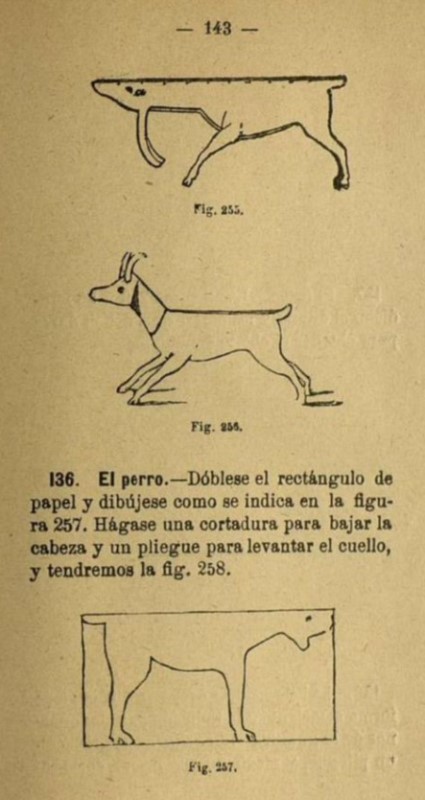
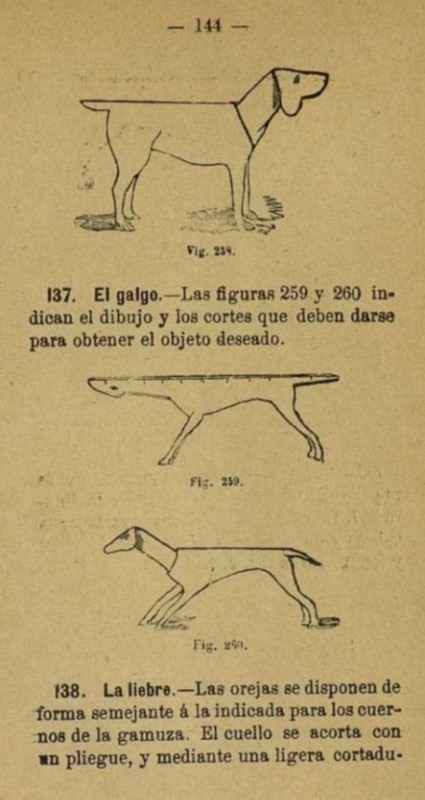
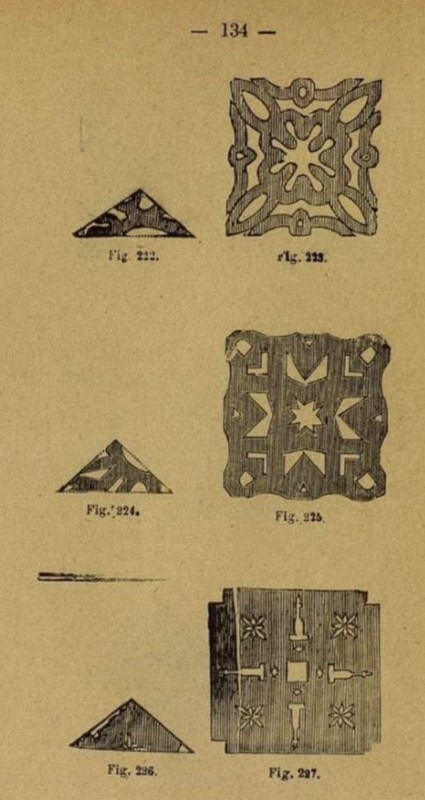
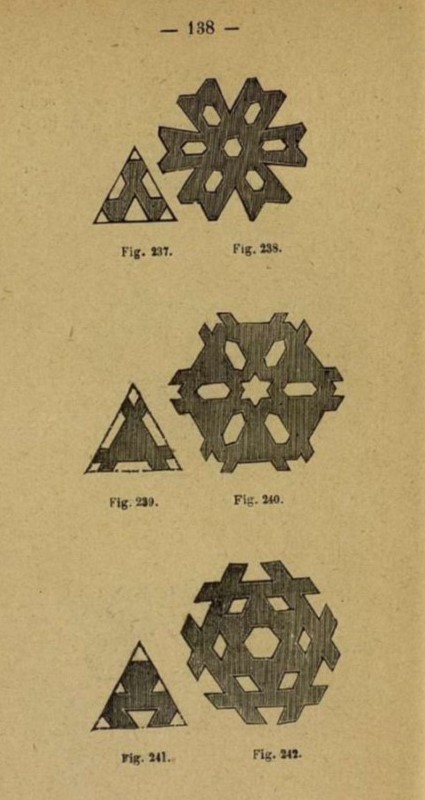
********** Recortado This section begins with an explanation of some designs of the Ausschneiden und Aufklaben type (although the cut out pieces are not retained or used), made from both squares and hexagons.
********** Froebel's Fold and One Cut Method of Constructing a Hexagon from a Square
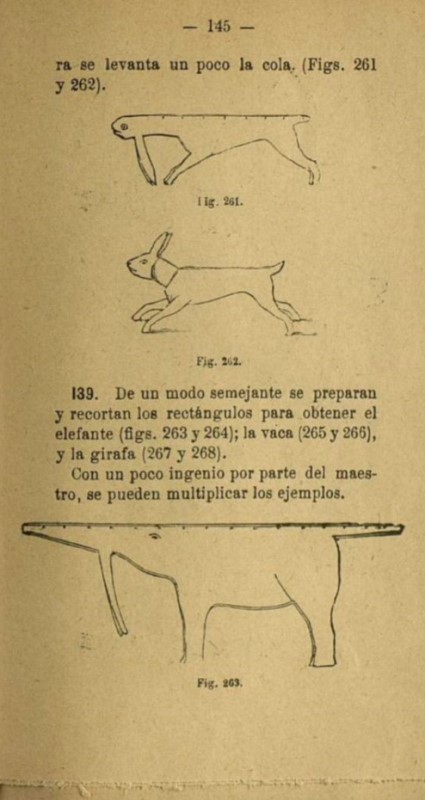
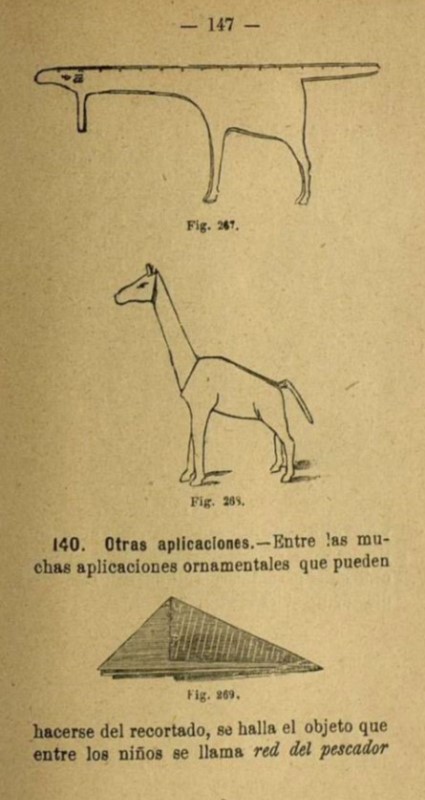
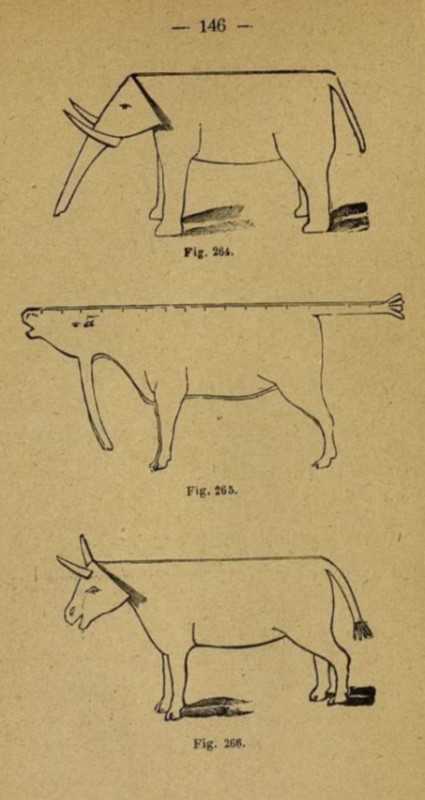
********** And continues with other sections about: Fold, Cut and Fold Animals
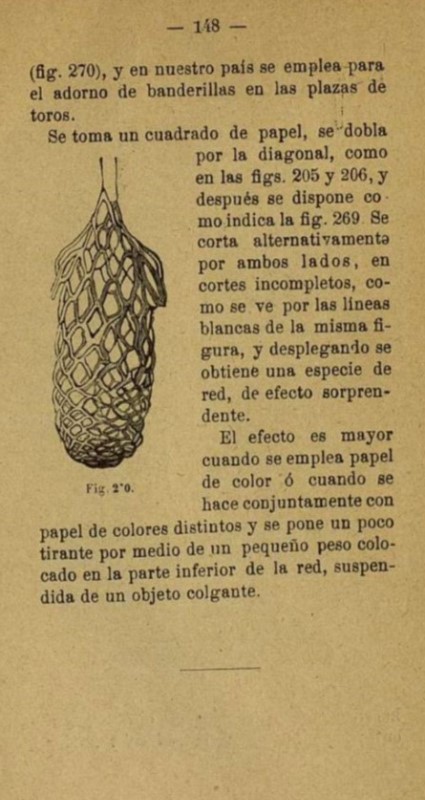
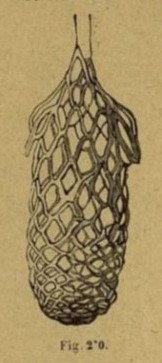
********** The Paper Cage
********** Selected Pages
********** |
|||||||



 z
z