| The Public Paperfolding History Project
Last updated 1/12/2025 x |
|||||||
| Lessons in Industrial Drawing by Mary Isabel Gilmore, 1890 | |||||||
| 'Lessons
in Industrial Drawing' by Mary Isabel Gilmore was
published by the Educational Publishing Company in Boston
in 1890. It uses paperfolding and cardboard modelling as
an aid to Form Study and the development of technical
drawing skills. A full copy of the chapter on Paper
Folding is reproduced below. The first edition is not dated on the title page. However a second printing made in 1892 states that the work is copyright 1890. I have not seen a full copy of the 1890 first edition which may also include this information. A partial copy of the first edition can be accessed online here. A full copy of the 1892 printing can be accessed online here. **********
**********
**********
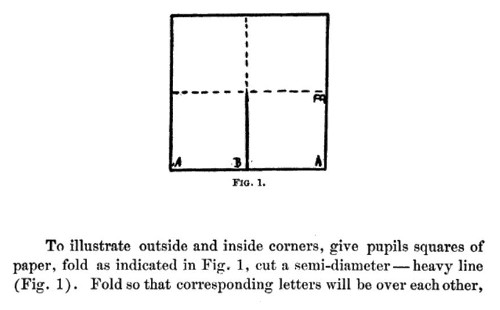
********** Analysis The first chapter contains a way of making a simple Cut Cube Corner.
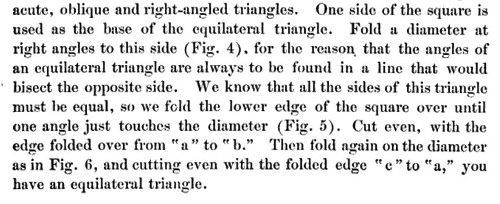
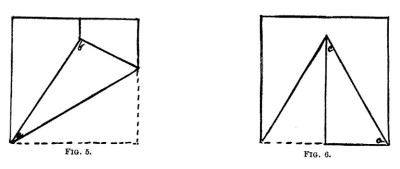
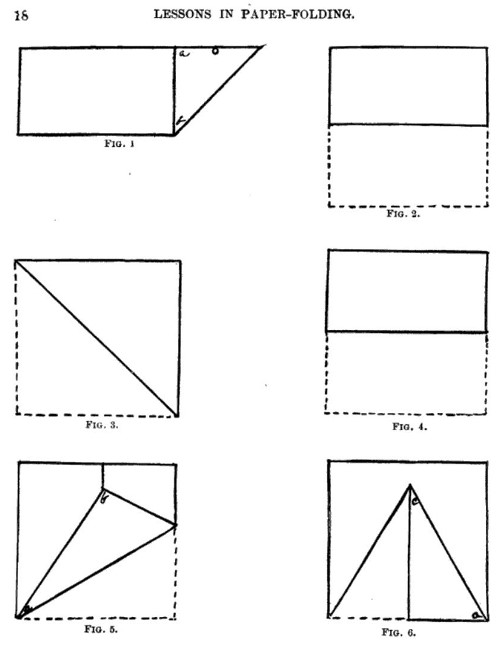
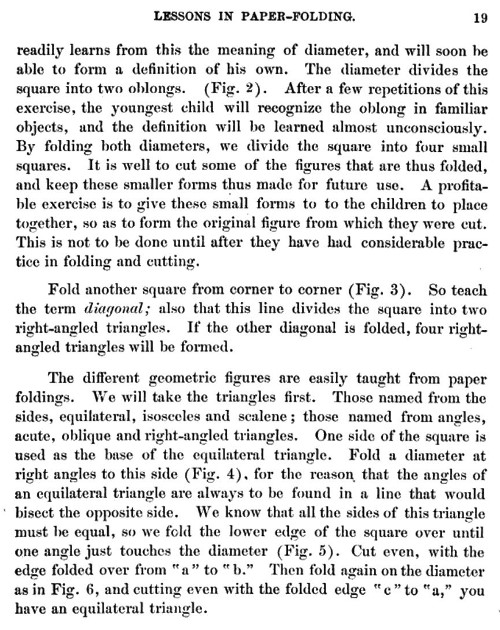
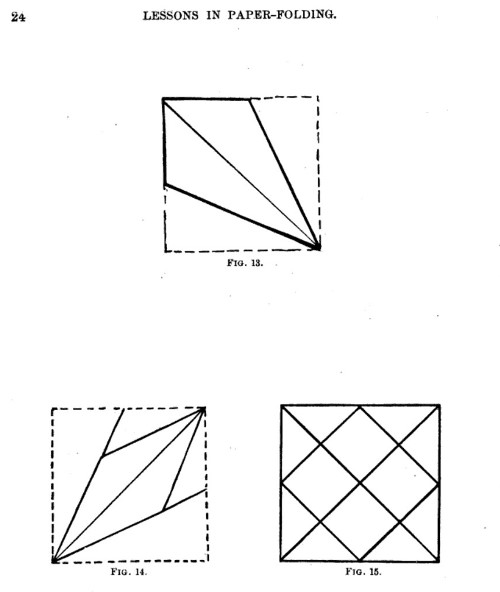
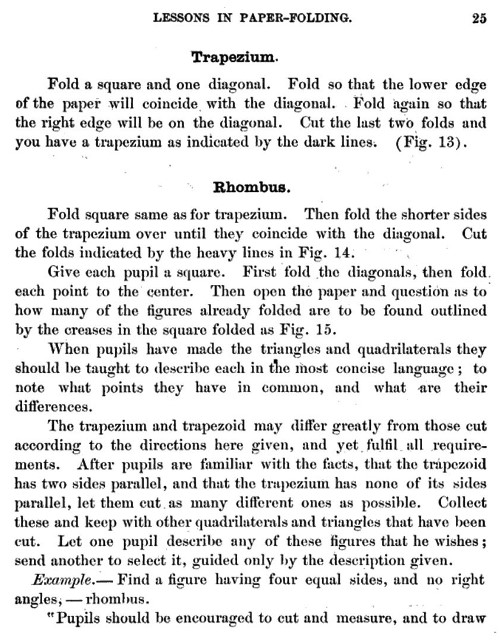
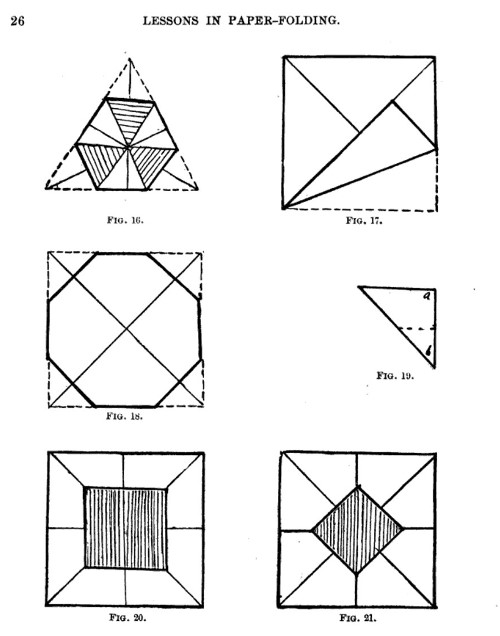
********** Folding Folding is used to create various flat geometric shapes from the square ie oblongs, various types of triangle, rhomboid, trapezoid, trapezium, rhombus, the regular hexagon, the regular octagon and a four-pointed star. Constructing the equilateral triangle
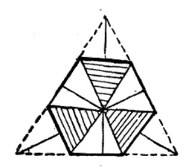
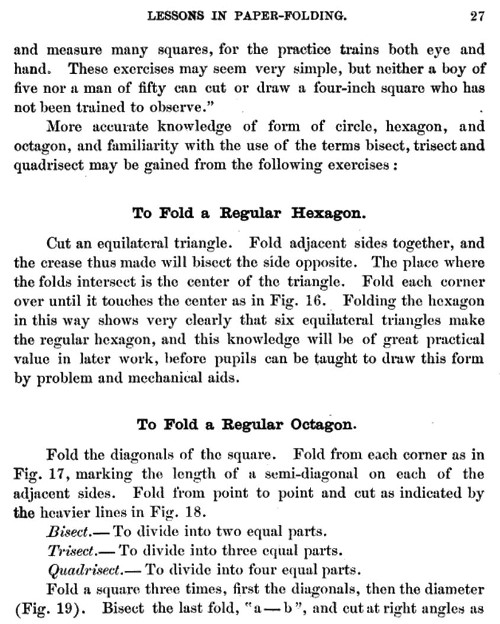
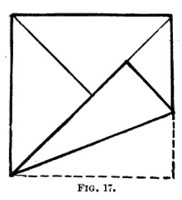
********** Constructing the regular hexagon
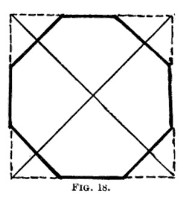
********** Constructing the regular octagon
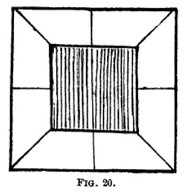
********** Folding and Cutting Folding and Cutting is used to create: An Open Frame
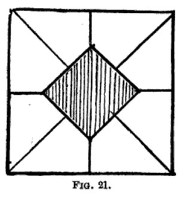
********** A Diagonally-Placed Open Frame
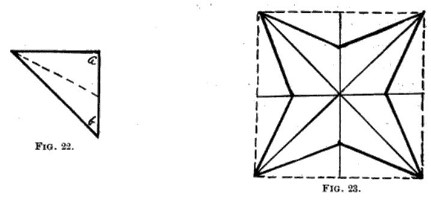
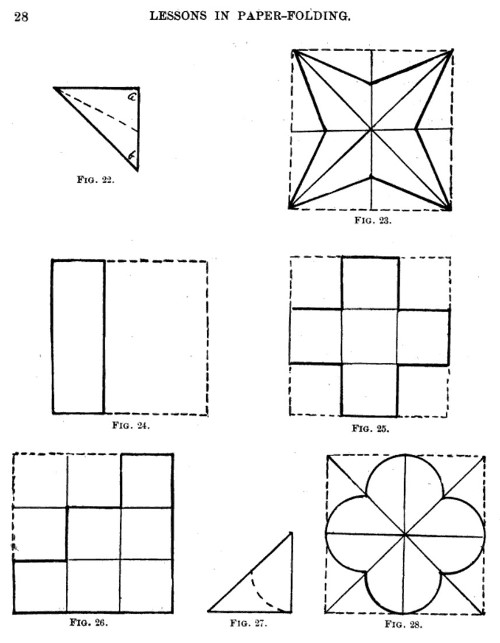
********** A Four-Pointed Star
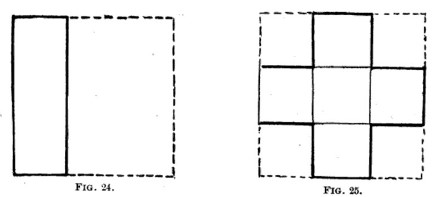
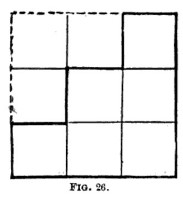
********** The Greek Cross and Flight of Steps These designs are made from a 3x3 grid and cutting away squares. No guidance on obtaining an accurate grid is given.
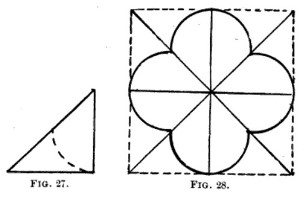
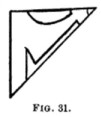
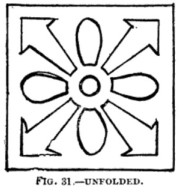
********** The Quatrefoil
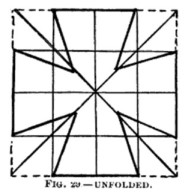
********** The Maltese Cross There is no Fig 29 to show how this shape is obtained.
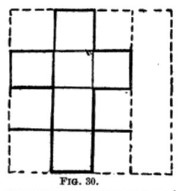
********** The Latin Cross This designs is cut from a 4x4 grid.
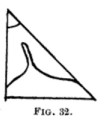
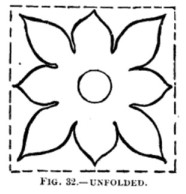
********** Designs with four-fold symmetry
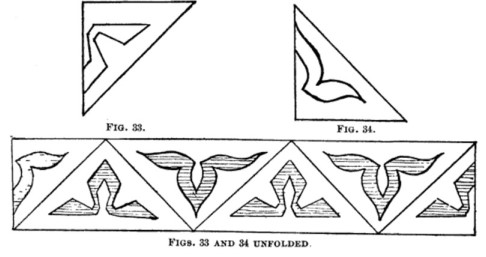
********** Friezes
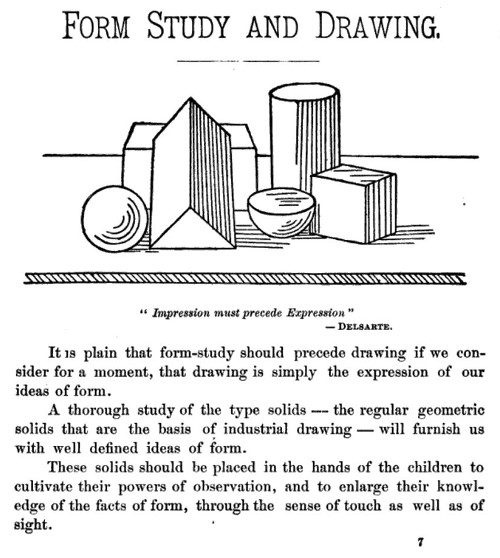
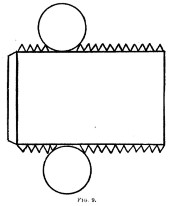
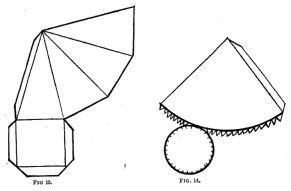
********** Cardboard Modelling Cardboard Modelling is used to create several polyhedral designs eg
********** Selected Pages
********** |
|||||||